
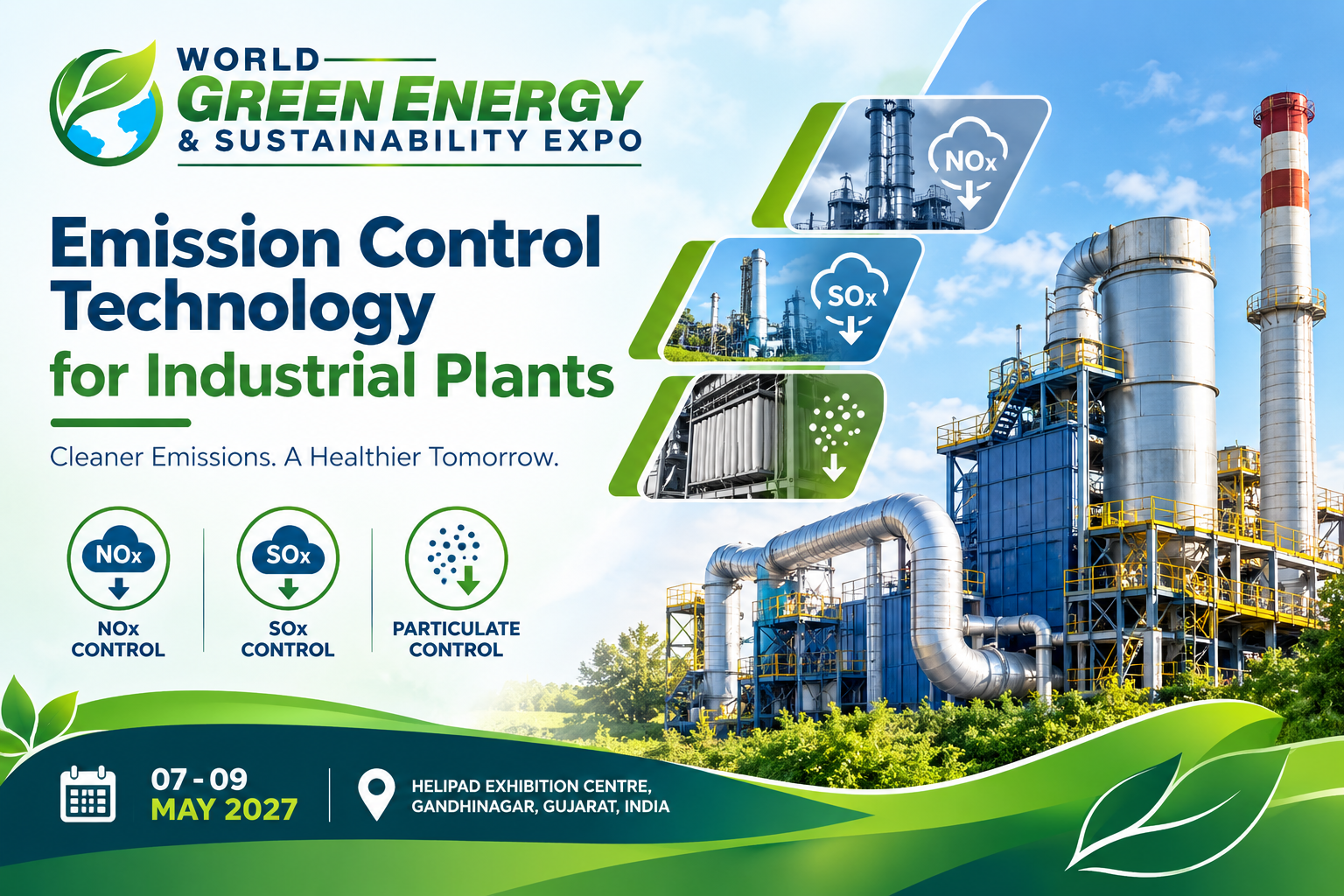
Every Smokestack in India Is Being Watched – And the Clock for Compliance Is Running
In 2025, India’s Central Pollution Control Board issued notices to 17 major industrial clusters across seven states – cement, steel, power, chemicals, and textiles – for persistent non-compliance with revised stack emission standards. In 2026, the National Green Tribunal ordered the closure of fourteen industrial units in three states for continued violation of particulate matter limits despite repeated compliance deadlines. And across Europe, the EU Industrial Emissions Directive revision – tightening NOx limits for combustion installations above 1 MW by up to 40% from existing standards – entered into force for permits issued from January 2026 onward.
The message is consistent, global, and accelerating: the era of treating industrial air pollution compliance as a negotiable timeline or a discretionary investment is ending. The regulatory frameworks, the monitoring infrastructure, the judicial enforcement mechanisms, and the commercial pressures from international buyers requiring supply chain environmental certification are all converging to make emission control technology investment a commercially mandatory business decision rather than a voluntary environmental gesture.
Industrial emission control systems refer to the equipment and technologies designed to reduce or eliminate harmful emissions produced by industrial processes, such as manufacturing, power generation, and chemical production. These systems are used to reduce the release of pollutants such as particulate matter (PM), sulfur dioxide (SO2), nitrogen oxides (NOx), volatile organic compounds (VOCs), and other hazardous gases into the atmosphere.
The flue gas treatment systems market size has grown strongly in recent years. It will grow from USD 74.31 billion in 2025 to USD 78.34 billion in 2026 at a compound annual growth rate of 5.4%. The flue gas treatment systems market size is expected to see strong growth in the next few years. It will grow to USD 96.45 billion in 2030 at a compound annual growth rate of 5.3%. The industrial emission control systems market size has reached USD 22.78 billion in 2025 and is expected to grow to USD 31.18 billion in 2030 at a CAGR of 6.3%.
Asia Pacific held a 46.5% revenue share in 2025 and is the largest regional market. Asia-Pacific was the largest region and fastest growing region in the industrial emission control systems market in 2025.
For emission control equipment manufacturers, wet and dry scrubber suppliers, electrostatic precipitator companies, bag filter manufacturers, selective catalytic reduction system providers, flue gas desulfurization technology licensors, and the industrial companies in cement, steel, power generation, chemicals, and textiles that face mandatory compliance investment – this is the complete, data-backed, commercially specific guide.
The Three Primary Industrial Pollutants – What They Are and Why They Matter
Understanding what NOx, SOx, and particulate matter are, where they come from, and why they are regulated provides the foundation for understanding which control technologies are appropriate for which industrial applications.
NOx – Nitrogen Oxides
Nitrogen oxides – primarily nitric oxide (NO) and nitrogen dioxide (NO2), collectively written as NOx – are formed during high-temperature combustion when nitrogen from the air or from fuel reacts with oxygen. NOx contributes to the formation of ground-level ozone and photochemical smog, causes acid deposition, and is associated with respiratory disease at ambient concentrations above regulatory thresholds.
Nitrogen oxides is expected to grow at the fastest CAGR from 2026 to 2035 within the stationary emissions control market – reflecting both the tightening of NOx emission standards globally and the increasing adoption of gas turbines for power generation, which cannot be permitted in most jurisdictions without a selective catalytic reduction system and an oxidation catalyst, so every megawatt of new thermal capacity carries an emissions control package with it.
The primary industrial sources of NOx in India are coal and biomass-fired power plant and industrial boiler combustion, cement kiln calcination at temperatures above 1,400 degrees Celsius, glass furnace combustion, and internal combustion engines in power generation and industrial process equipment.
SOx – Sulphur Oxides
Sulphur oxides – primarily sulphur dioxide (SO2) and sulphur trioxide (SO3) – are formed when sulphur present in fuels – coal, heavy fuel oil, pet coke – is oxidized during combustion. SO2 causes acid rain, contributes to fine particulate matter formation through atmospheric chemistry, and is a direct respiratory irritant at elevated concentrations.
The primary industrial sources of SOx in India are coal-fired power plants and industrial boilers burning high-sulphur coal or pet coke, cement kilns using pet coke as a supplementary fuel, and oil refineries during fluid catalytic cracking and Claus sulphur recovery operations.
Flue gas desulphurization held the largest share of 32.8% in 2025 in the stationary emissions control market – reflecting the enormous installed base of FGD equipment on coal-fired power plants globally and the continued regulatory pressure for new installations.
Particulate Matter – PM10 and PM2.5
Particulate matter – solid particles and liquid droplets suspended in exhaust gas streams – ranges from coarse particles above 10 micrometers (PM10) through fine particles below 2.5 micrometers (PM2.5) to ultrafine particles below 1 micrometer. PM2.5 is the pollutant of greatest public health concern because its small aerodynamic diameter enables deep penetration into the respiratory system and even systemic circulation – with documented associations to cardiovascular disease, lung cancer, and premature mortality.
The primary industrial sources of particulate matter in India are coal combustion in power plants and industrial boilers, cement production during raw material handling, kiln operation, and clinker cooling, steel manufacturing during electric arc furnace and converter operations, and agricultural residue combustion in biomass-fired industrial boilers.
This segment stays large because particulate control is required not only in power and cement, but also in metals, mining, grain handling, and waste processing applications.
The Regulatory Landscape – India’s CPCB Standards and Global Comparison
Understanding the regulatory framework that creates the market for emission control technology is the most commercially important context for any company evaluating this sector.
India’s CPCB Emission Standards
India’s Central Pollution Control Board emission standards for industrial stack emissions have been progressively tightened over the past decade – and the pace of tightening is accelerating as the CPCB’s Continuous Emission Monitoring System (CEMS) mandatory installation requirement brings enforcement capability closer to the real-time monitoring standards of European environmental regulators.
For industrial boilers – one of the most commercially relevant applications for World Green Energy & Sustainability Expo (WGES) exhibitors – CPCB standards set particulate matter limits of 150 mg per normal cubic meter for boilers of 2 to 10 MW thermal input, 100 mg per Nm3 for boilers of 10 to 50 MW, and 50 mg per Nm3 for boilers above 50 MW. SOx limits are 600 mg per Nm3 for coal or lignite-fired boilers across all capacity ranges. NOx limits are 600 mg per Nm3 for boilers below 500 MW and 300 mg per Nm3 for larger units.
For thermal power plants – India’s single largest emission point – the Ministry of Environment, Forest and Climate Change notification of December 2015, revised in 2019 and again in 2022, sets increasingly stringent limits for PM (30 to 100 mg per Nm3 depending on plant vintage and location), SO2 (200 to 600 mg per Nm3), and NOx (300 to 600 mg per Nm3). Plants within 10 kilometers of critical areas including national parks, ecologically sensitive zones, and critically polluted areas face the tightest standards.
The CEMS mandatory installation requirement – requiring continuous, real-time monitoring of PM, SO2, NOx, CO, O2, temperature, flow, and moisture at all major stack emission points above regulatory threshold sizes — is the single most commercially significant regulatory development for India’s emission control equipment market. Before CEMS, industrial facilities could cite measurement uncertainty in self-reported compliance data. With CEMS transmitting data directly to CPCB and state pollution control board servers in real time, non-compliance is instantly visible and immediately enforceable.
The EU Industrial Emissions Directive Revision
Tighter European permitting rules are leading operators to bring forward abatement upgrades owing to a revision of the rules that govern how industrial permits are set.
The EU’s revised Industrial Emissions Directive – which entered into force for new permits from January 2026 – tightens Best Available Technique Associated Emission Levels (BATAELs) for large combustion plants, cement kilns, glass furnaces, and chemical installations by 20 to 40% from existing standards. For European operators, this revision creates a mandatory capital investment cycle in emission control equipment upgrades that is generating significant procurement across all technology categories.
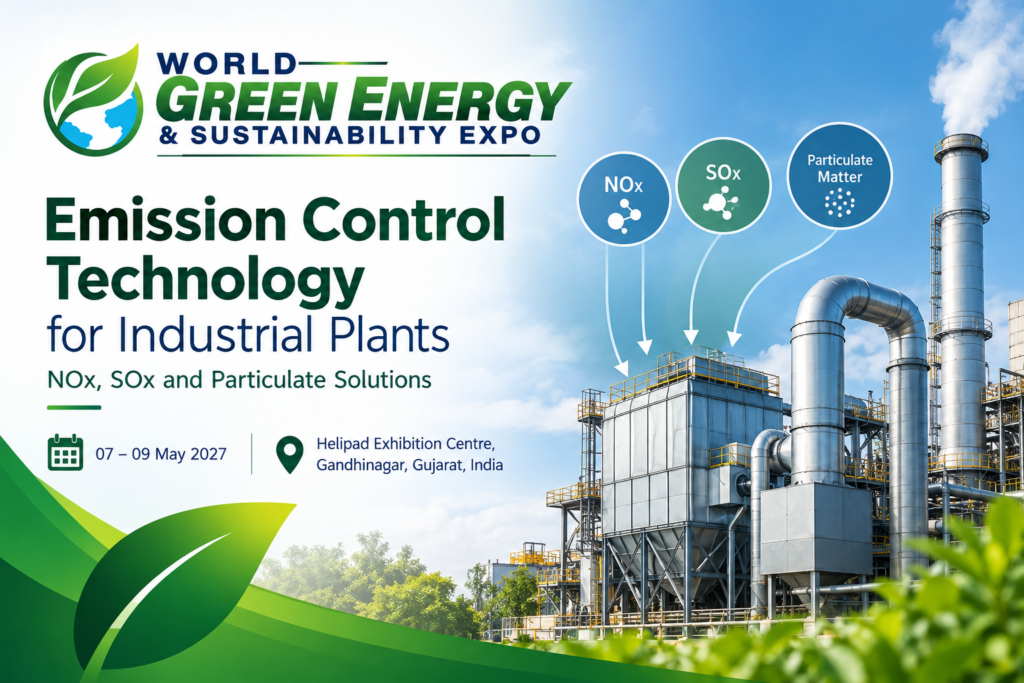
US EPA MATS and National Emission Standards
The US EPA’s Mercury and Air Toxics Standards – currently under enforcement with strengthened hazardous air pollutant limits – require coal-fired power plants to install mercury control equipment including activated carbon injection and fabric filters capable of capturing mercury-bearing fine particulates. The US also enforces New Source Performance Standards that effectively require SCR for NOx control and FGD or dry sorbent injection for SOx control at all new fossil fuel combustion installations above 250 MMBtu per hour.
CBAM and Supply Chain Environmental Compliance
The EU Carbon Border Adjustment Mechanism – in full force from July 2026 – creates indirect pressure on industrial emission control beyond direct regulatory compliance. CBAM charges are calculated based on the embedded emissions in exported products, including direct process emissions and the emissions from fuel combustion that emission control equipment can reduce. For Indian cement, steel, aluminium, and chemical producers exporting to EU markets, reducing stack emissions through emission control investment directly reduces CBAM liability – creating a commercial incentive for pollution control investment that operates independently of domestic regulatory requirements.
Particulate Control Technologies – Electrostatic Precipitators and Fabric Filters
Particulate control is the most widely deployed emission control technology category globally – required across every combustion process, many industrial chemical processes, and virtually every sector of heavy manufacturing.
Electrostatic Precipitators – The High-Volume Workhorse
Electrostatic precipitators work by applying a high-voltage electric field across the gas stream – typically 40,000 to 70,000 volts – that charges the particulate matter in the gas and causes it to migrate to collecting electrodes, from which it is periodically removed by mechanical rapping and collected in hoppers for disposal or utilization.
ESPs are the dominant particulate control technology for large combustion plants – power stations, cement kilns, and large industrial boilers – because they handle very high gas volumes with low pressure drop, can operate at temperatures up to 450 degrees Celsius without cooling the gas stream, and achieve collection efficiencies above 99.5% for coarse and medium-sized particles. Modern wet electrostatic precipitators – operating with a water film on the collecting electrodes – extend collection efficiency into the fine particulate range below PM2.5 and simultaneously remove condensed acid aerosols, making them appropriate for high-sulphur fuel combustion applications where fine sulphate particulates are a significant emission component.
For India’s coal-fired power plants – which account for the largest single sector of ESP installations in the country – the upgrade from original ESPs designed to 1980s emission standards to the tighter 2022 CPCB limits is a major procurement cycle that is generating significant demand for ESP upgrade services, including field charging system upgrades, power supply modernization, and collection electrode refurbishment.
Fabric Filters – The Fine Particulate Specialist
Fabric filters – also known as baghouses or bag filters – collect particulate matter by passing the gas stream through a woven or felted fabric that acts as a physical barrier to particle penetration. As particles accumulate on the fabric surface, the filter cake itself becomes the primary collection mechanism – capturing very fine particles that the fabric alone would pass. Fabric filters achieve PM emission concentrations below 10 mg per Nm3 at the stack – well below the tightest CPCB standards – making them the technology of choice for applications where very low emission concentrations are required or where fine, sticky, or hazardous particulates make ESP collection unreliable.
Fabric filters are standard on biomass-fired industrial boilers, cement mill and kiln baghouses, coal handling facilities, pharmaceutical spray dryers, and food powder processing equipment. In India’s rapidly expanding biomass boiler market – where agricultural residue fuels generate high-ash, sticky particulates that can be difficult to collect in ESPs – pulse-jet fabric filters are the dominant specification for installations above 5 MW thermal.
For emission control equipment manufacturers, the biomass boiler market expansion is creating growing domestic demand for baghouses and pulse-jet bag filter systems in the 50,000 to 500,000 cubic meter per hour gas volume range – the scale typical of Indian industrial boiler applications of 10 to 100 tonnes of steam per hour.
Cyclone Separators – The Pre-Treatment Stage
Cyclone separators use centrifugal force – by spinning the gas stream in a cylindrical vessel – to separate coarse particles from the gas before it enters the main particulate control device. Cyclones cannot achieve the fine particle collection that ESPs or fabric filters provide, but they protect downstream equipment from the bulk coarse ash load, extending filter bag life and reducing ESP maintenance requirements. Multi-cyclone arrangements – banks of small-diameter cyclones operating in parallel – improve fine particle collection efficiency while maintaining the pressure drop and maintenance simplicity advantages of the cyclone design.
In India’s biomass boiler market, a cyclone plus fabric filter combination is the standard pollution control configuration for CPCB compliance – with the cyclone removing the bulk of the coarse agricultural ash and the fabric filter achieving the PM50 or PM100 mg per Nm3 stack standard at which most Indian industrial boilers operate.
SOx Control Technologies – Desulphurization from Wet to Dry
SOx control technology selection is determined by the SO2 concentration in the flue gas, the required removal efficiency, the available capital budget, the availability of reagents, and the desired by-product characteristics.
Wet Flue Gas Desulphurization – The Power Plant Standard
Wet FGD systems – using limestone slurry to absorb SO2 from the flue gas through a spray tower or packed tower absorber – are the dominant SOx control technology for large combustion plants. They achieve SO2 removal efficiencies above 98% and produce gypsum as a commercially marketable by-product for use in wallboard and cement manufacturing. Wet FGD is the standard specification for Indian coal-fired power plants above 500 MW capacity, and the regulatory push to install FGD on India’s large power plant fleet – 300 GW of coal-fired capacity with significant FGD backlog – represents one of the largest single emission control equipment procurement programs in Asia.
The technical standard for Indian coal power plant FGD installation – requiring commissioning by 2026 for plants in critical areas under the December 2015 MoEFCC notification – has created an enormous and commercially specific procurement market for wet FGD equipment, limestone handling systems, gypsum processing equipment, and the wastewater treatment systems that wet FGD operations generate. Bharat Heavy Electricals, Doosan, Mitsubishi Power, and several Chinese FGD equipment manufacturers are actively competing for this procurement.
Spray Dry Absorbers – The Medium-Scale Alternative
Spray dry absorbers atomize a slurry of hydrated lime into the hot flue gas stream, where the water evaporates and the dry sorbent reacts with SO2 before being collected in a downstream fabric filter. Spray dry systems achieve 90 to 95% SO2 removal – somewhat lower than wet FGD – but at significantly lower capital cost, without generating a wet by-product requiring wastewater treatment, and with a simpler operational profile that is more suitable for medium-scale industrial applications where the full operational complexity of wet FGD is disproportionate to the emission control requirement.
For India’s industrial boilers and cement plants where coal or pet coke is the fuel and SO2 control is required to meet CPCB standards, spray dry absorbers represent the commercially accessible technology option that combines adequate performance with manageable capital and operating cost.
Dry Sorbent Injection – The Retrofit-Friendly Option
Dry sorbent injection – injecting powdered hydrated lime or trona directly into the flue gas duct upstream of a fabric filter – is the simplest and lowest-capital SOx control option, requiring no spray system, no liquid handling, and no significant civil construction. DSI achieves 50 to 70% SO2 removal efficiency – lower than wet or spray dry systems – but its very low capital cost makes it commercially attractive for retrofit applications where the compliance requirement is modest or where interim compliance before more complete solutions are installed is the objective.
SOx and NOx categories are also stable and sizable, supported by scrubbers across the full range of industrial applications.
Wet Scrubbers – The Versatile Chemical Absorption System
Wet scrubbers – contacting the flue gas with liquid absorbent in various packed bed, venturi, or spray tower configurations – can remove SO2, HCl, HF, and acid mists simultaneously in a single unit, making them particularly versatile for industrial applications with complex emission profiles. The choice of scrubbing liquid – water, caustic soda, lime slurry, or sodium bicarbonate – determines which gases are removed and at what efficiency. Packed bed scrubbers are standard for acid gas control in chemical and pharmaceutical manufacturing, where the scrubber must handle concentrated acid gas streams that power plant FGD systems are not designed to accommodate.
NOx Control Technologies – From Combustion Management to Catalytic Reduction
NOx control presents a different engineering challenge from particulate or SOx control – because NOx is formed in the combustion process itself rather than being a contaminant carried in the fuel, making it impossible to eliminate simply by switching to a different feedstock or adding an end-of-pipe scrubber without addressing combustion conditions.
Primary Control – Low-NOx Burners and Combustion Modification
The most cost-effective approach to NOx control is reducing NOx formation during combustion rather than removing it from the exhaust gas after formation. Low-NOx burner designs – which reduce peak flame temperatures and create fuel-rich combustion zones where thermal NOx formation is suppressed – can reduce NOx emissions by 30 to 60% compared to conventional burner designs without requiring additional reagent systems or catalytic equipment.
Combustion optimization – adjusting air-to-fuel ratios, burner staging, and fuel distribution across multiple burner rows in large boilers – supplements low-NOx burner design to maximize NOx reduction without catalytic treatment. In India’s industrial boiler market, low-NOx burner retrofits represent one of the most cost-effective emission compliance investments available – particularly for gas-fired boilers where the combustion control flexibility of gas enables greater NOx reduction through combustion management than coal firing typically permits.
Selective Catalytic Reduction – The High-Performance Solution
Selective Catalytic Reduction is the highest-performance NOx control technology for stationary combustion sources, achieving NOx reduction efficiencies of 80 to 90% across a wide range of operating conditions. SCR injects ammonia or urea into the flue gas stream upstream of a catalyst bed – typically vanadium pentoxide on titanium dioxide – where the reagent reacts with NOx to produce harmless nitrogen gas and water vapor.
A gas turbine cannot be permitted in most jurisdictions without a selective catalytic reduction system and an oxidation catalyst, so every megawatt of new thermal capacity carries an emissions control package with it. SCR is the standard NOx control technology for gas turbines, large coal-fired power plants in regions with tight NOx standards, and large industrial boilers above 100 MW thermal in NOx-sensitive areas. The catalyst bed – which must be maintained within a specific temperature window of 300 to 400 degrees Celsius for maximum efficiency – is the most technically critical component, and catalyst replacement every 3 to 7 years depending on operating conditions represents a significant recurring cost that must be factored into SCR system lifecycle economics.
Selective Non-Catalytic Reduction – The Lower-Cost Alternative
Selective Non-Catalytic Reduction injects urea or ammonia directly into the furnace at temperatures of 850 to 1,100 degrees Celsius – where the reagent reacts thermally with NOx without requiring a catalyst. SNCR achieves 30 to 60% NOx reduction efficiency – significantly lower than SCR – but at a fraction of the capital cost, because no catalyst bed or associated reactor vessel is required. SNCR is the preferred NOx control technology for cement kilns, waste incinerators, and industrial boilers where the combination of moderate emission limits and capital budget constraints makes SCR disproportionate to the compliance requirement.
For India’s cement sector – which faces NOx emission limits of 800 mg per Nm3 under current CPCB standards with reduction expected in the revised standards anticipated by 2027 – SNCR represents the most commercially viable NOx control pathway for existing kilns, while new kilns are increasingly designed with combustion modification and precalciner arrangements that reduce NOx formation at source.
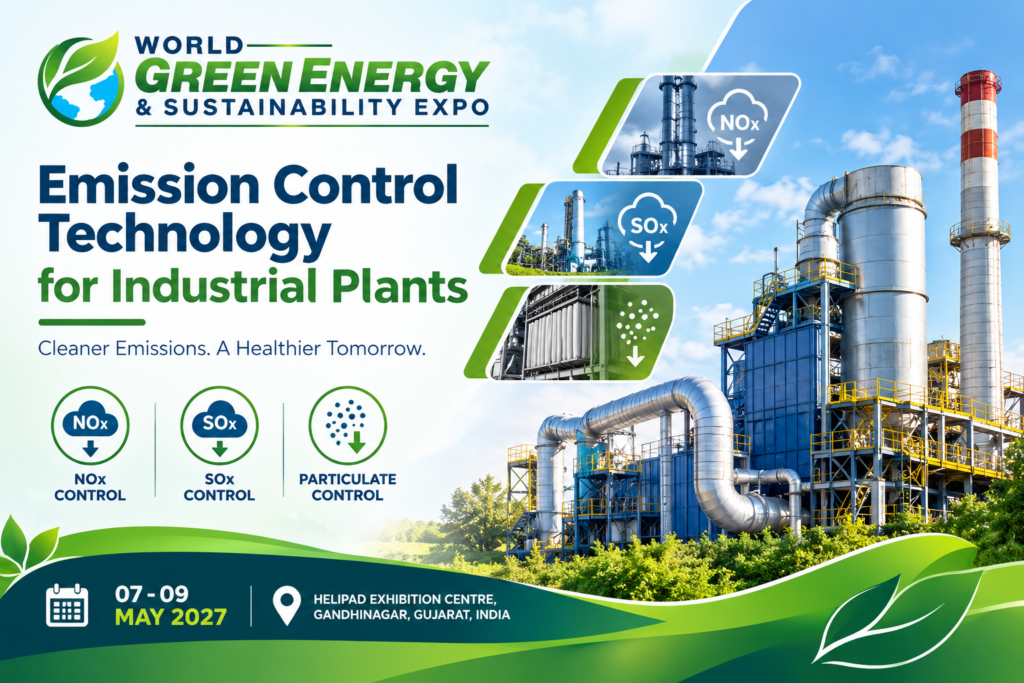
Advanced and Integrated Emission Control Systems
Modern industrial facilities increasingly require integrated emission control systems that address multiple pollutants simultaneously in a single process train – rather than separate systems for particulate, SOx, and NOx that each require independent equipment, reagents, monitoring, and maintenance.
Multi-Pollutant Control Systems
Multi-pollutant control systems integrate desulphurization, NOx reduction, mercury removal, and particulate control into a single equipment train that minimizes total system capital cost, physical footprint, and operational complexity. Advanced configurations combining activated carbon injection for mercury capture, spray dry absorption for SO2 control, and pulse-jet fabric filtration for particulate control – in a single compact unit – are increasingly specified for mid-scale industrial installations where space is constrained and operational simplicity is valued.
Activated Carbon Injection for Mercury and Dioxin Control
Mercury emission from coal combustion – concentrated in fine particulate matter and in vapor form – is subject to increasingly stringent regulation globally following the Minamata Convention. Activated carbon injection – injecting powdered activated carbon into the flue gas stream upstream of a fabric filter – adsorbs mercury vapor onto the carbon particles before they are captured in the filter. Activated carbon injection also controls polychlorinated dibenzodioxins and furans (PCDD/F) from waste incinerators and biomass combustion operations, where PCDD/F formation can be significant if combustion conditions are not carefully managed.
Carbon Capture Integration
Carbon capture projects in cement and steel do not begin with the capture unit alone, because they also require cleaner and more stable flue gas upstream of the absorber. That requirement is creating parallel demand for wet electrostatic precipitators, gas coolers, and advanced desulfurization systems that protect capture equipment from sulfur, moisture, and particulate contamination. The integration of carbon capture with conventional emission control systems is one of the most commercially significant emerging trends in the industrial emission control market. Amine-based CO2 capture systems – which are highly sensitive to SOx, NOx, and particulate matter that degrade the capture solvent and foul the absorber packing – require upstream flue gas treatment to a higher specification than most existing emission control systems achieve. This requirement is creating additional emission control equipment demand from carbon capture projects that otherwise would not require system upgrades.
Continuous Emission Monitoring Systems – The Regulatory Backbone
Every emission control system requires a monitoring system – and India’s mandatory CEMS requirement is creating a significant additional market alongside the abatement equipment itself.
A complete CEMS installation for a large industrial stack includes gas analyzers for SO2, NOx, CO, O2, and total particulate matter – typically using UV fluorescence, chemiluminescence, gravimetric correlation, and extractive or in-situ analysis techniques – combined with flow measurement, temperature, pressure, and moisture measurement for mass emission rate calculation, and a data acquisition system that transmits real-time data to CPCB servers as required by the Environment Protection Act.
For emission control equipment companies, CEMS represents an important service revenue opportunity alongside equipment supply – because every new emission control system installation and every existing stack above the regulatory threshold requires CEMS, and maintenance, calibration, and data management services from CEMS systems create recurring annual revenue alongside the initial equipment sale.
The Companies Leading Industrial Emission Control
CECO Environmental
CECO Environmental provides industrial air pollution control technologies for particulate matter, acid gases, NOx, VOCs, and other pollutants. In December 2025, the company secured an order exceeding USD 135 million for an emissions management solution at a large natural gas power generation facility in Texas. The solution is designed to provide ultra-low emissions while meeting environmental requirements. CECO Environmental’s December 2025 USD 135 million order is the largest single emission control contract in the North American market in 2025 – demonstrating the scale of capital that emission compliance is mobilizing from utilities and industrial companies. CECO’s portfolio spans air pollution control, fluid handling, and filtration technologies across power, oil and gas, chemicals, and industrial manufacturing.
ANDRITZ AG
In February 2025, ANDRITZ AG, an Austria-based technology company, acquired LDX Group for an undisclosed sum. ANDRITZ’s acquisition of LDX Group strengthens its position in industrial gas cleaning – particularly fabric filter and electrostatic precipitator systems for pulp and paper, energy, and environmental applications. ANDRITZ is one of Europe’s most comprehensive industrial equipment groups, with emission control technology deployed across pulp and paper mills, biomass power plants, and waste-to-energy facilities globally.
Mitsubishi Heavy Industries
Mitsubishi Heavy Industries provides flue gas treatment systems for controlling sulfur dioxide and other pollutants from power and industrial facilities.
Mitsubishi Power – the power sector subsidiary of Mitsubishi Heavy Industries – is one of the world’s largest suppliers of wet FGD systems for coal-fired power plants, with a global installed base across Japan, the United States, Europe, Southeast Asia, and India. Its technology deployment across India’s power plant FGD upgrade program – one of the largest ongoing emission control investment program in Asia – makes it a key reference supplier for Indian power utilities.
Babcock and Wilcox
Babcock and Wilcox serves both the power generation and the emissions control markets with a technology portfolio spanning steam generation, environmental systems, and renewable energy. Its emission control product range includes wet and dry FGD systems, SCR and SNCR NOx control equipment, fabric filters, and multi-pollutant control systems. Its Indian project references – across NTPC and state utility power plants – give it the local track record that Indian procurement organizations require.
Siemens Energy
Siemens Energy supplies emission control systems as an integrated component of its gas turbine and combined cycle power plant offerings – where SCR and oxidation catalyst systems are mandatory package elements for new gas turbine installations in most regulated markets. Its SPPA control platform integrates emission monitoring with power plant control for optimized operation within emission permit limits.
Thermax Limited
Thermax is India’s most comprehensive domestic emission control equipment company, with a product range spanning electrostatic precipitators, fabric filters, wet scrubbers, and multi-pollutant control systems for industrial boilers, cement plants, and chemical processing facilities.
Thermax’s Indian market position – built on decades of application engineering for the specific dust characteristics, fuel qualities, and regulatory environments of Indian industrial facilities – gives it advantages that international competitors cannot easily replicate. Its nationwide service network for ESP maintenance, bag filter replacement, and CEMS calibration creates recurring service revenue alongside equipment supply. For Indian industrial buyers who priorities local responsiveness and established regulatory compliance knowledge over international brand premium, Thermax is typically the first domestic emission control equipment provider to evaluate.
Tata Projects and L&T
For India’s largest emission control installations – FGD retrofit projects on power plants above 500 MW, multi-stack environmental management systems for large refinery and petrochemical complexes – Tata Projects and Larsen and Toubro serve as EPC contractors who integrate emission control equipment from technology suppliers into complete installation projects. Their project management capability, civil construction expertise, and experience with NTPC and state utility procurement processes makes them the preferred delivery partners for the scale of project that individual equipment suppliers cannot execute independently.
Forbes Marshall
Forbes Marshall’s expertise in steam system optimization creates a natural application in emission control – where improving boiler combustion efficiency simultaneously reduces fuel consumption and NOx formation. Its combustion management systems and boiler control products address the primary control dimension of NOx management that reduces the load on end-of-pipe SCR or SNCR systems.
India’s Specific Emission Control Market – The Compliance Deadline Creating Procurement
India’s emission control market is driven by three overlapping compliance timelines that are creating simultaneous procurement pressure across cement, steel, power, and industrial boiler sectors.
The thermal power plant FGD installation deadline – originally 2022, revised to 2026 for critical areas and 2027 for remaining plants – has created one of the largest single emission control procurement programs in Indian industrial history. India has approximately 200 GW of coal-fired generation capacity requiring FGD installation, of which approximately 30 to 40 GW was operational as of early 2026. The remaining 160 to 170 GW represents a procurement pipeline worth tens of thousands of crores that is being actively tendered by NTPC, state generating companies, and independent power producers simultaneously.
The CPCB CEMS mandatory installation program – requiring all major industrial stacks above regulatory threshold sizes to transmit real-time emission data to CPCB servers – is creating procurement for CEMS hardware, data transmission systems, and ongoing calibration and maintenance services across thousands of industrial facilities simultaneously.
The National Clean Air Program – targeting 40% reduction in PM2.5 and PM10 concentrations in 132 non-attainment cities by 2026 – is specifically targeting industrial emission sources in and around these cities for enhanced compliance monitoring and enforcement. Industrial facilities in the NCAP target cities face heightened scrutiny, faster enforcement response to CEMS non-compliance readings, and stronger pressure to install emission control technology upgrades that reduce ambient contribution to monitored levels.
Gujarat’s GPCB – the Gujarat Pollution Control Board – operates one of India’s most active industrial emission monitoring programs, with established CEMS data portal infrastructure for the state’s dense chemical and industrial corridors. For industrial facilities in Gujarat’s Dahej, Ankleshwar, and Surat industrial areas, real-time CEMS compliance is already operationally required – not merely regulatory aspiration.
The Business Case – ROI Framework for Emission Control Investment
The economic case for emission control investment in India has three distinct components that together are often more persuasive to industrial management teams than the regulatory compliance argument alone.
1: Regulatory Compliance and Penalty Avoidance
The National Green Tribunal’s increasing willingness to impose operational closures – rather than simply monetary fines – on persistent non-compliant facilities creates a business continuity risk that financial management teams take seriously in a way that modest fines historically did not compel. An industrial facility generating INR 50 crore of monthly revenue faces a far more compelling case for INR 2 to 5 crore of emission control investment when the alternative is NTG-ordered operational shutdown that eliminates that revenue entirely.
2: CBAM and Export Market Access
For Indian industrial exporters to EU markets, emission control investment that reduces stack emissions reduces CBAM liability proportionally – because CBAM is calculated on embedded emissions that include fuel combustion emissions reducible through cleaner combustion and emission control. For a cement plant exporting 500,000 tonnes per year to Europe, a 30% reduction in specific SO2 and NOx emissions through emission control investment could reduce CBAM liability by EUR 2 to 4 million annually at current EU carbon prices – a financial return that materially improves the investment case for emission control beyond domestic compliance alone.
3: Operational Efficiency Co-Benefits
Emission control investment frequently delivers operational efficiency co-benefits that partially offset equipment cost. Low-NOx burner retrofits that reduce NOx through air staging simultaneously improve combustion efficiency by reducing excess air, typically saving 1 to 3% in fuel consumption. Fabric filter dust collection systems in cement and chemical plants recover product that would otherwise be lost as stack emission – the recovered dust can be recycled to the process or sold as a product, generating revenue that partially offsets filter operating cost. And CEMS systems that provide real-time combustion efficiency data alongside emission measurements enable operators to optimize fuel consumption against emission limits simultaneously – an operational benefit that persists throughout the equipment’s service life.
Technology Trends Reshaping Emission Control Through 2030
AI-Optimized Combustion Control for NOx Minimization
Artificial intelligence applications in combustion management – using machine learning models trained on historical combustion data to continuously optimize burner firing rates, air distribution, and fuel distribution across large multi-burner furnaces – are achieving NOx reductions of 15 to 30% beyond what conventional PID control achieves. For industrial facilities where combustion control alone can meet tightening NOx standards without SCR, AI combustion optimization represents a lower-capital compliance pathway that simultaneously improves fuel efficiency.
Modular and Containerized Emission Control
The development of modular, factory-assembled emission control systems – deployable in standard shipping container footprints without the large civil construction requirements of conventional site-erected equipment – is making emission control economically accessible to mid-scale industrial facilities that cannot justify the capital expenditure of conventional systems. Approximately 48% of potential emission control projects are delayed or deferred due to upfront cost concerns – and modular systems that reduce both capital cost and installation time address this barrier directly.
Digital Emission Management Platforms
Introducing advanced gas leak detection technology for industrial emission control is identified as a major market trend. Digital emission management platforms – integrating CEMS data, process variable data, and regulatory reporting requirements into a single software environment – are reducing the operational burden of emission compliance management from a specialist activity requiring dedicated environmental engineers to a routine operational monitoring function accessible to plant operations teams.
Carbon Capture Ready Design
Carbon capture projects in cement and steel also require cleaner and more stable flue gas upstream of the absorber. That requirement is creating parallel demand for wet electrostatic precipitators, gas coolers, and advanced desulfurization systems that protect capture equipment from sulfur, moisture, and particulate contamination.
Industrial facilities that are planning or anticipating future carbon capture installation are increasingly specifying emission control systems to a “carbon capture ready” standard – achieving the flue gas quality that downstream capture equipment requires, even before the capture unit itself is installed. This forward-looking specification creates emission control equipment sales that capture the compliance value of current regulations and the future optionality value of carbon capture integration simultaneously.
Why World Green Energy & Sustainability Expo (WGES 2027) Is the Right Platform for India’s Emission Control Industry
India’s emission control equipment market is at the most commercially active moment in its history – driven simultaneously by the thermal power plant FGD installation deadline, the mandatory CEMS installation program, the CPCB compliance enforcement acceleration, the NCAP non-attainment city industrial source program, and the CBAM pressure on industrial exporters that connects emission control directly to European market access and pricing competitiveness.
Every segment of the value chain – ESP and fabric filter manufacturers, wet and dry FGD equipment suppliers, SCR and SNCR system providers, CEMS hardware and software companies, combustion management system providers, and the engineering contractors who execute large-scale emission control installation projects – has immediate, specific, commercially actionable procurement opportunity in India right now.
World Green Energy & Sustainability Expo (WGES 2027)’s industrial boiler and environmental technology exhibitor community directly serves this ecosystem. Every boiler manufacturer at World Green Energy & Sustainability Expo (WGES 2027) sells into facilities that need combustion emission control. Every biomass boiler installation needs a bag filter or ESP. Every coal-fired industrial boiler above 5 MW needs CPCB-compliant stack emission control. And every industrial company attending World Green Energy & Sustainability Expo (WGES) as a visitor is evaluating emission compliance investment as a mandatory capital allocation rather than a discretionary sustainability initiative.
Gujarat – World Green Energy & Sustainability Expo (WGES 2027)’s host state – contains some of India’s most active emission control procurement markets. The Dahej and Ankleshwar chemical corridors face CPCB CEMS compliance requirements across hundreds of stack emission points. Surat’s textile and pharmaceutical clusters are actively upgrading boiler emission control to meet CPCB particulate standards. Gujarat’s power generation fleet includes multiple units in the FGD installation program. And the state’s GPCB real-time monitoring infrastructure means that emission compliance in Gujarat is more closely and continuously monitored than in almost any other Indian state.
For electrostatic precipitator and bag filter manufacturers targeting India’s biomass boiler and cement sector procurement, for FGD technology companies competing for India’s thermal power plant upgrade program, for SCR and SNCR system providers addressing the cement and industrial boiler NOx market, for CEMS hardware and software companies targeting India’s mandatory monitoring program, and for engineering contractors executing emission control installation projects across India’s most industrially active state – World Green Energy & Sustainability Expo (WGES 2027) is where India’s emission control community meets the buyers, utilities, industrial operators, and regulators who are driving the most commercially significant compliance investment cycle in India’s industrial history.