
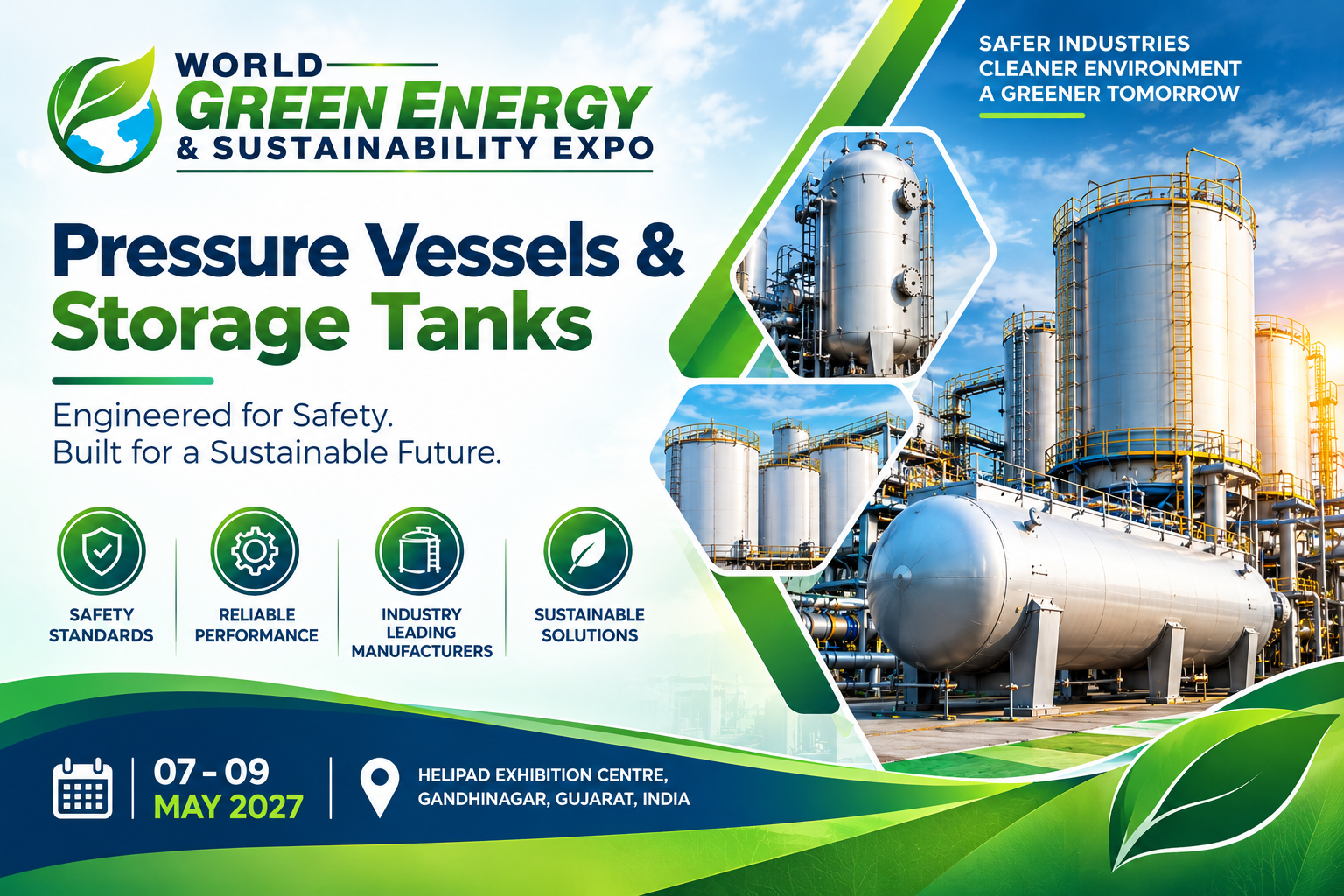
The Equipment That Holds the World’s Most Dangerous Fluids – and the Market Growing Around It
Every refinery, every chemical plant, every pharmaceutical facility, every green hydrogen project, every LNG terminal, every fertilizer complex, and every power plant on earth operates around a fundamental engineering requirement that is so basic it is almost invisible in most energy and industrial discussions – the safe containment of fluids at pressures and temperatures far beyond what ambient conditions allow.
Pressure vessels are engineered containers designed to hold gases or liquids at a pressure substantially different from ambient pressure. A boiler holding steam at 50 bar. A reactor vessel maintaining a chemical synthesis at 200 bar and 350 degrees Celsius. A green hydrogen storage sphere holding 700 bar of compressed hydrogen for a fuel cell vehicle refueling station. A cryogenic tank holding liquid nitrogen at minus 196 degrees Celsius for pharmaceutical manufacturing. An ammonia storage bullet holding refrigerated ammonia for a fertilizer plant at minus 33 degrees Celsius. These are all pressure vessels – and every one of them must be designed, fabricated, inspected, certified, and operated to standards that, if not followed exactly, can result in catastrophic failures with consequences measured in lives, environmental impact, and facility destruction.
The global pressure vessel market size was valued at USD 58.20 billion in 2025. The market is projected to grow from USD 60.76 billion in 2026 to USD 84.91 billion by 2034, exhibiting a CAGR of 4.27% during the forecast period. The global storage pressure vessel market is valued at approximately USD 64.09 billion in 2026 and is projected to reach USD 100.19 billion by 2035, growing at a CAGR of around 5.1% from 2026 to 2035.
India is likely to reach USD 5.63 billion in the pressure vessel market in 2026, making it one of the fastest-growing national markets in Asia-Pacific – which dominates with a 38.79% market share globally. The January 1, 2026 mandatory adoption of the 2025 ASME BPVC creates an immediate services and upgrade opportunity around re-qualification, documentation modernization, and code-aligned redesign for fabricators and asset owners operating multi-code portfolios across ASME and PED environments.
For pressure vessel fabricators, storage tank manufacturers, engineering companies, material suppliers, inspection and certification bodies, and the chemical, pharmaceutical, oil and gas, power generation, and green energy companies that are the primary buyers of this equipment – this is the complete, data-backed, commercially specific guide to where the global pressure vessel market stands in 2027.
The Global Pressure Vessel Market – Size, Structure, and Growth
The variance across research house valuations of the pressure vessel market reflects genuine scope differences – some include only unfired process and storage vessels, others include boilers, heat exchangers, and nuclear reactor vessels, and scope definitions for industrial storage tanks versus process pressure vessels differ significantly. The most useful commercial picture comes from understanding the range and the consistent direction.
The pressure vessels market is estimated to be valued at USD 65.32 billion in 2026 and is expected to reach USD 86.54 billion by 2033, exhibiting a CAGR of 4.1% from 2026 to 2033. The global pressure vessel market is projected to grow from USD 60.77 billion in 2025 to USD 63.52 billion in 2026 and is forecast to reach USD 79.23 billion by 2031 at 4.52% CAGR over 2026 to 2031. Energy-infrastructure modernization, Asia-Pacific nuclear construction, and hydrogen-economy investments are reshaping demand profiles.
Composite overwrapped pressure vessels lead the technology shift because weight-to-strength advantages enable hydrogen mobility and space applications. Ultra-high-pressure ratings above 100 bar expand quickly as fuel-cell vehicles and supercritical chemical processing become mainstream. The pressure vessel market also benefits from tougher safety standards such as ASME, PED, and API 510, which accelerate replacement cycles and favor certified manufacturers.
Hydrogen-storage demand accounts for approximately 37% of new pressure-vessel applications, boosting composite vessel procurement globally.
By application, storage vessels account for the largest segment – holding gases, liquids, and chemicals at pressure – followed by processing vessels including reactors, separators, and heat exchangers. By end use, oil and gas, chemicals and petrochemicals, and power generation together account for over 60% of total demand, with pharmaceuticals, food and beverages, and the rapidly growing green energy sector comprising the balance and faster-growing segments.
By material, steel alloys remain dominant at approximately 29.7% – but carbon-fiber composite vessels account for approximately 35% of the market in terms of unit count, driven by the hydrogen mobility and aerospace applications where composite vessels’ weight-to-strength advantage over steel makes them technically and commercially essential.
Pressure Vessel Types
1: Process Pressure Vessels – Reactors, Separators, and Columns
Process pressure vessels are the workhorses of chemical, petrochemical, pharmaceutical, and food processing plants – designed for specific chemical reactions, phase separations, or mass transfer operations rather than simply for storage.
Reactor vessels hold catalytic beds, heat transfer tubes, and reactant fluids under the pressure and temperature conditions required for specific chemical reactions. They are among the most technically demanding pressure vessels in any chemical plant – requiring precise temperature control through internal or external heat exchange, mechanical internals for catalyst distribution and product separation, and material selection that resists both the chemical environment and the operating temperature over decades of continuous service.
Separator vessels remove liquid droplets from gas streams, separate oil-gas-water three-phase streams in oil production and remove solids from process liquids in mining and chemical applications. Their design is driven by the fluid properties and flow rates of the specific separation task – vessel diameter, internals configuration, and operating pressure and temperature are all application-specific.
Distillation and absorption columns – tall, narrow vertical pressure vessels with internal trays or packing – are fundamental to chemical and petrochemical refining and separation. India’s expanding petrochemical and specialty chemical industry is one of the most active procurement markets for process column fabrication in Asia.
2: Storage Pressure Vessels – Bullets, Spheres, and Cryogenic Tanks
Storage pressure vessels hold fluids in compressed or liquefied form between production and use. The design challenge is different from process vessels – the primary requirement is safe, reliable containment over extended periods with minimal maintenance – but the safety consequences of failure are often more severe because storage vessels typically hold very large quantities of hazardous fluid.
Horizontal bullet tanks – typically 5 to 300 cubic meters of capacity – are the standard configuration for propane, butane, ammonia, and carbon dioxide storage at moderate pressures of 5 to 25 bar. Their cylindrical-with-end-cap geometry is simple to fabricate and provides good space efficiency for most industrial storage requirements.
Spherical pressure vessels – Horton spheres – are used for very large storage volumes of pressurized gases including LPG, ammonia, and natural gas. Their spherical geometry provides the lowest surface area per unit of volume of any vessel shape, minimizing material consumption for very large capacities. LPG storage spheres of 2,000 to 5,000 cubic meters are standard at large industrial complexes and petroleum storage terminals.
Cryogenic storage tanks hold liquefied gases at temperatures below minus 150 degrees Celsius – liquid nitrogen at minus 196 degrees Celsius, liquid oxygen at minus 183 degrees Celsius, liquid hydrogen at minus 253 degrees Celsius, and LNG at minus 162 degrees Celsius. Their design requires vacuum-insulated double-wall construction with perlite or aerogel insulation in the annular space, ultra-low-temperature-compatible materials for the inner vessel – typically 304 or 316 austenitic stainless steel or 9% nickel steel for cryogenic hydrogen – and specialized valves, instrumentation, and safety systems capable of operating at cryogenic temperatures.
The green hydrogen storage opportunity is one of the most commercially significant new demand segments for pressure vessel manufacturers globally. China’s H1 2026 commissioning of a 1.5 million standard cubic meter deep-underground salt cavern hydrogen storage facility in Pingdingshan, Henan included verification of domestically produced 22 MPa diaphragm hydrogen compressors – demonstrating that hydrogen storage at commercial scale is moving from demonstration to operational reality.
3: Composite Overwrapped Pressure Vessels – The High-Growth Category
Composite overwrapped pressure vessels use a metal or polymer liner for the primary containment barrier, overwrapped with high-strength carbon fiber or glass fiber composite to provide the structural reinforcement that allows operation at very high pressures while maintaining far lower weight than an all-metal vessel of equivalent rating. Carbon-fiber reinforcement adoption is reported at approximately 35%, accelerating lightweight, high-pressure vessel deployments globally. Type IV composite pressure vessels – using a polymer liner completely overwrapped with carbon fiber – are the dominant technology for hydrogen vehicle onboard storage at 700 bar, where the weight penalty of a steel vessel at this pressure would be commercially prohibitive for vehicle range and payload.
The green hydrogen economy is the primary driver of composite pressure vessel demand growth – hydrogen fueling stations require 700 bar dispenser systems, hydrogen transport tube trailers typically operate at 200 to 350 bar, and both applications require either composite vessels or specialist high-strength steel vessels at weights and costs that composite designs increasingly win.
4: Industrial Storage Tanks – API 650 Atmospheric and Low-Pressure
Atmospheric and low-pressure bulk liquid storage tanks – designed to API 650 standard for petroleum and chemical liquids, or API 620 standard for low-pressure gas storage – are not classified as pressure vessels under most regulatory codes, but they are manufactured by the same fabricators and sold to the same customer base, and they represent the largest volume segment of industrial liquid containment equipment.
Fixed-roof tanks, floating-roof tanks, and double-wall tanks are the dominant configurations for petroleum, chemical, water, and food product bulk liquid storage. India’s expanding oil product storage infrastructure – as the government builds strategic petroleum reserve capacity at Padur, Mangalore, and Vishakhapatnam – is one of the largest single storage tank procurement programs in Asia, alongside the storage tank requirements for India’s rapidly expanding ethanol and biofuel production and distribution infrastructure.
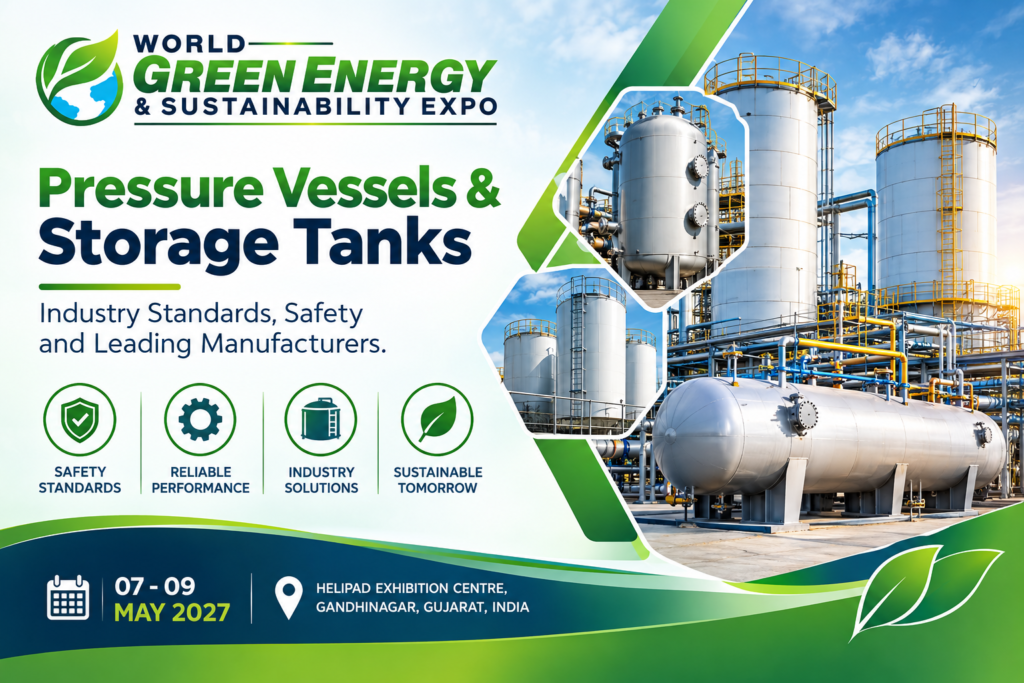
The Regulatory Framework – ASME, IBR, PED, and the 2026 Updates
Understanding the regulatory standards governing pressure vessel design, fabrication, inspection, and operation is commercially essential for every manufacturer, user, and inspector in this market – because standards compliance is not optional, it determines market access, and the standards are changing in commercially significant ways.
ASME Boiler and Pressure Vessel Code – The January 2026 Mandatory Adoption
The ASME Boiler and Pressure Vessel Code is the most widely recognized and internationally adopted pressure vessel design and fabrication standard in the world. The mandatory adoption of the 2025 ASME BPVC from January 1, 2026 creates an immediate services and upgrade opportunity around re-qualification, documentation modernization, and code-aligned redesign for fabricators and asset owners operating multi-code portfolios across ASME and PED environments. –
Over 20 distinct paragraphs in ASME BPVC Section VIII have been amended, replaced, or modified for pressure vessels, particularly affecting welding, radiography, joint requirements, and external pressure design.
ASME BPVC Section VIII Division 1 – the most widely applied division for industrial process and storage vessels – governs the design of unfired pressure vessels up to 3,000 psi. Division 2 applies alternative rules for higher-pressure vessels, allowing thinner wall construction through more rigorous design analysis but requiring more comprehensive inspection. Division 3 addresses very high-pressure vessels above 10,000 psi – the domain of composite hydrogen vessels and ultra-high-pressure chemical processing equipment.
The ASME U-stamp – issued to fabricators whose quality management systems and vessel designs have been audited and approved by ASME-authorized inspection agencies – is the commercial prerequisite for selling ASME-code pressure vessels in North American markets and in the international project market where ASME compliance is specified. Indian fabricators with ASME U-stamp authorization access a significantly larger international market than those without, and the stamp renewal requirement every three years creates a recurring compliance activity for certified fabricators.
European Pressure Equipment Directive – January 2026 Update
The European Commission issued Implementing Decision EU 2026/79 on January 12, 2026, updating the list of harmonised references, including revisions tied to the EN 13445 series for unfired pressure vessels.
The EU Pressure Equipment Directive – revised as PED 2014/68/EU – governs the design, manufacture, and conformity assessment of pressure equipment marketed in the European Union. The January 2026 implementing decision updates the harmonized standards referenced against PED compliance – meaning equipment designs certified against the updated EN standards receive presumption of conformity with PED essential safety requirements without separate technical file review. For Indian pressure vessel manufacturers targeting European export markets, PED conformity through CE marking is the commercial prerequisite.
Indian Boiler Regulations – IBR and the Amendment Bill
In India, steam-side pressure vessels – including steam drums, headers, and superheater coils operating above 1 kg per square centimeter – are regulated under the Indian Boiler Regulations administered by state boiler authorities under the Indian Boilers Act. The Boiler Amendment Bill 2024 – advancing through Parliament in February 2025 – is the most significant revision to India’s pressure equipment regulatory framework since 1923.
IBR approval for pressure parts – requiring design drawing approval, material certificate verification, and hydrostatic testing witness by authorized inspectors – is mandatory for every steam-side pressure vessel manufactured and installed in India. The approval process adds lead time and compliance cost to pressure vessel supply for Indian industrial boiler and power plant applications, but simultaneously provides buyers with regulatory assurance of design adequacy and fabrication quality.
For non-steam pressure vessels – process vessels, storage bullets, and chemical reactors – India’s Explosive Act and PESO (Petroleum and Explosives Safety Organization) licensing requirements govern vessels handling flammable or explosive substances above threshold quantities. PESO license procurement is a mandatory step in the commissioning of any vessel holding petroleum, LPG, ammonia, or other classified substances in commercial quantities.
API Standards for Oil and Gas Applications
API 510 – Pressure Vessel Inspection Code – and API 579 – Fitness for Service – govern the in-service inspection, remaining life assessment, and repair of pressure vessels in the oil, gas, and chemical industries. API 650 governs the design and fabrication of welded steel atmospheric storage tanks for petroleum and chemical products. API 620 governs large-volume, low-pressure storage tanks including LNG outer tanks and large gas holders.
For Indian refineries, petrochemical plants, and oil product storage facilities, API standards are the de facto technical requirements for pressure equipment – with IOCL, BPCL, HPCL, and private sector operators including Reliance Industries specifying API codes for all their process vessels and storage tanks regardless of whether domestic IBR requirements also apply.
Safety in Pressure Vessels – The Engineering Framework
The safety of pressure vessels is the defining characteristic of this equipment category – and the reason that design, fabrication, inspection, and operation standards exist at all. Pressure vessel failures – when they occur – are among the most catastrophic industrial accidents possible.
Design Safety Factors and Allowable Stress
Pressure vessel design codes specify allowable stresses for vessel shell, head, and nozzle components that incorporate safety factors ranging from 2.4 to 4.0 times the material’s specified minimum tensile strength, depending on the code, material, and service conditions. These safety factors provide margins against material property uncertainty, fabrication imperfections, transient overpressure events, and long-term service degradation that are inherent in any industrial operating environment.
Pressure vessel design is not simply a calculation exercise – it requires engineering judgement about the most likely failure modes for a specific vessel in a specific service, and the design must address each failure mode with appropriate conservatism. Fatigue failure from cyclic pressure loading, stress corrosion cracking from aggressive fluid environments, creep from high-temperature operation, and brittle fracture from low-temperature service are each addressed through specific design code provisions that override the basic allowable stress calculation where they are relevant.
Material Selection – The Foundation of Safety
Material selection is the most consequential single engineering decision in pressure vessel design, because the material must maintain its mechanical properties, corrosion resistance, and toughness throughout the vessel’s intended service life under the combination of operating temperature, pressure, and fluid chemistry the vessel will experience.
Carbon steel is the standard material for most industrial pressure vessels where the fluid is not corrosive at operating temperature and where the operating temperature is above approximately minus 29 degrees Celsius – the lower ductile-to-brittle transition temperature limit of most carbon steel grades. Stainless steel – types 304, 316, 321, and 347 – is specified for corrosive fluid service, high-temperature service above approximately 450 degrees Celsius, and cryogenic service where carbon steel’s impact toughness at low temperature is insufficient. Nickel alloys – Hastelloy, Inconel, and Monel – are specified for the most aggressive chemical environments including concentrated sulphuric acid, hydrofluoric acid, and oxidizing acids at elevated temperature. Titanium is specified for corrosion resistance in aggressive marine, chemical, and pharmaceutical environments where its combination of low density, high strength, and exceptional corrosion resistance provides advantages over nickel alloys at lower cost.
Composite materials – carbon fiber reinforced polymer for high-pressure hydrogen vessels – are specified where weight minimization is the overriding design requirement, with carbon fiber’s specific tensile strength of approximately 3,500 MPa compared to approximately 500 MPa for structural steel providing the fundamental physics that enables pressure containment at 700 bar in a vessel light enough for vehicle installation.
Advanced composite production costs are 20 to 30% higher than traditional materials, impeding broader adoption – but the green hydrogen vehicle and mobile hydrogen storage markets are driving production scale increases that are progressively reducing composite vessel costs toward the price points where they become competitive with steel vessels in stationary applications as well as mobile ones.
Non-Destructive Testing and Inspection
Every pressure vessel manufactured to ASME, EN, or IBR standards undergoes mandatory non-destructive examination before being placed in service – and most continue to require periodic in-service inspection throughout their operating life.
Radiographic examination of weld joints – using X-ray or gamma-ray sources to create images of the weld cross-section – detects internal flaws including porosity, incomplete fusion, cracks, and inclusions that are invisible to surface inspection and that, if left undetected, could propagate to failure under operating conditions. Full radiography of all weld joints is required for the highest ASME joint efficiency category, while spot radiography is permitted for lower joint efficiency designs with correspondingly higher design safety factors.
Ultrasonic testing complements or substitutes for radiography in specific applications – providing more sensitive crack detection in thick-walled vessels where radiography has limited sensitivity and enabling examination of nozzle-to-shell welds and other geometrically complex weld configurations that are difficult to radiograph effectively.
Hydrostatic testing – pressurizing the completed vessel to 1.5 times its design pressure with water – provides an integral proof test of the vessel’s pressure boundary integrity that no combination of non-destructive examination methods can replicate. Every ASME-code vessel undergoes hydrostatic testing as the final quality acceptance step before delivery.
In-service inspection programs – governed by API 510 for process vessels – include periodic external visual inspection, periodic internal inspection during turnaround maintenance, and ultrasonic thickness measurement to monitor corrosion rates and verify that remaining vessel wall thickness provides adequate pressure containment. Risk-based inspection – RBI – using quantitative assessment of failure probability and consequence to optimize inspection scope and interval – is the current best practice for in-service inspection planning in India’s refinery and petrochemical sector.
Green Energy Applications – The New Frontier for Pressure Vessels
The transition to green energy is creating entirely new demand categories for pressure vessel technology – hydrogen storage, green ammonia containment, biogas and biomethane compression vessels, carbon capture absorption columns, and thermal energy storage systems – that are among the fastest-growing procurement segments in the global pressure vessel market.
Hydrogen Storage Vessels
Hydrogen storage demand accounts for approximately 37% of new pressure-vessel applications globally, making it the single largest emerging application segment in the entire market.
At 700 bar compression – the standard for hydrogen vehicle onboard storage – hydrogen storage requires either composite overwrapped pressure vessels with carbon fiber reinforcement or extremely high-strength special steel alloys. Type IV composite vessels – polymer liner with full carbon fiber overwrap – are the dominant automotive hydrogen storage technology, and the scale-up of hydrogen vehicle and hydrogen bus programs in Japan, South Korea, Germany, and India is driving composite vessel production scale-up by Hexagon Purus, Luxfer, ILJIN Composite, and Worthington Industries.
For stationary hydrogen storage at fueling stations and buffer storage at green hydrogen production facilities, 200 to 350 bar steel tube trailers and high-pressure vessel arrays are the standard technology. China’s H1 2026 commissioning of a 1.5 million standard cubic meter deep-underground salt cavern hydrogen storage facility demonstrates that strategic-scale hydrogen storage is becoming commercially operational, requiring pressure vessel and compression equipment at a scale that conventional industrial hydrogen storage programs never approached.
For India’s National Green Hydrogen Mission, green hydrogen storage vessels – at both production facility buffer storage scale and hydrogen refueling station scale – represent a new procurement category that India’s pressure vessel fabricators are beginning to address through engineering upgrades and certification programs for hydrogen service.
Green Ammonia Storage
Green ammonia – produced from green hydrogen and nitrogen through the Haber-Bosch process – is stored in refrigerated ammonia vessels at minus 33 degrees Celsius and atmospheric pressure, or in pressurized ammonia bullets at ambient temperature and approximately 8 to 10 bar. The scale-up of India’s green ammonia production – anchored by AM Green’s Kakinada facility targeting 1 million tonnes per year and ACME’s Gopalpur project – requires ammonia storage vessels at a scale comparable to India’s largest existing chemical storage infrastructure.
Ammonia storage vessels are among the most technically demanding storage pressure vessels for material selection – requiring carbon or low-alloy steel with guaranteed low-temperature impact properties at minus 40 degrees Celsius for refrigerated service, and stress corrosion cracking resistant steel grades for pressurized service where ammonia stress corrosion of susceptible materials is a well-documented failure mechanism.
Biogas and Compressed Biogas Vessels
India’s SATAT program – targeting 5,000 compressed biogas plants – requires pressure vessels at every plant for biogas storage, compression, and dispensing. CBG dispensing infrastructure requires 250 bar cascade storage vessels essentially identical in specification to CNG dispensing equipment. The scale of India’s CBG plant construction pipeline – with hundreds of plants in active development following the mandatory CBG blending obligation – creates a directly actionable procurement market for domestic pressure vessel fabricators in the 250 bar gas storage category.
Carbon Capture Absorption Vessels
Post-combustion carbon capture systems use pressurized absorption columns – typically tall, large-diameter stainless steel or carbon steel columns with corrosion-resistant internal lining – to contact flue gas with amine solvent that selectively absorbs CO2. The column design is a direct adaptation of the distillation and absorption column technology that petrochemical equipment fabricators have manufactured for decades, but with specific requirements for amine corrosion resistance and the elevated pressures of modern CO2 capture systems.
Carbon capture projects in cement and steel are creating parallel demand for advanced desulfurization and particulate control equipment that protects capture equipment from upstream contamination – meaning pressure vessel procurement for carbon capture projects spans both the capture columns themselves and the upstream flue gas conditioning equipment.
India’s Pressure Vessel Market – The USD 5.63 Billion Opportunity
India is likely to reach USD 5.63 billion in pressure vessel market value in 2026 – the third-largest national market in Asia-Pacific after China and Japan, and growing faster than either of those more mature markets.
India’s pressure vessel procurement is driven by five simultaneous growth engines. Petrochemical complex expansion – including ONGC’s Dahej petrochemical facility, HPCL’s Rajasthan refinery and petrochemical complex, and the Petroleum Chemicals and Petrochemicals Investment Region at Dahej – requires both process pressure vessels and bulk storage tanks at very large individual scales.
Pharmaceutical manufacturing growth – driven by PLI scheme incentives for API and finished dosage form production – requires high-specification stainless steel process vessels, sterile processing equipment, and the IBR-compliant steam supply vessels that regulated pharmaceutical manufacturing demands.
Green hydrogen and green ammonia production infrastructure – discussed in detail in earlier sections – creates an entirely new pressure vessel procurement category that did not exist in India’s market three years ago.
Ethanol distillery construction – with hundreds of new grain-based and molasses-based distillery projects under active construction across UP, Maharashtra, and Gujarat – requires fermentation tanks, distillation column reboiler vessels, and effluent evaporation vessels that together represent significant capital equipment procurement per plant.
Strategic petroleum reserve expansion – with India building underground rock cavern reserves at Padur in Karnataka, Mangalore in Karnataka, and Visakhapatnam in Andhra Pradesh – requires storage tank and pressure vessel equipment for the surface facilities connecting the underground storage to the distribution pipeline network.
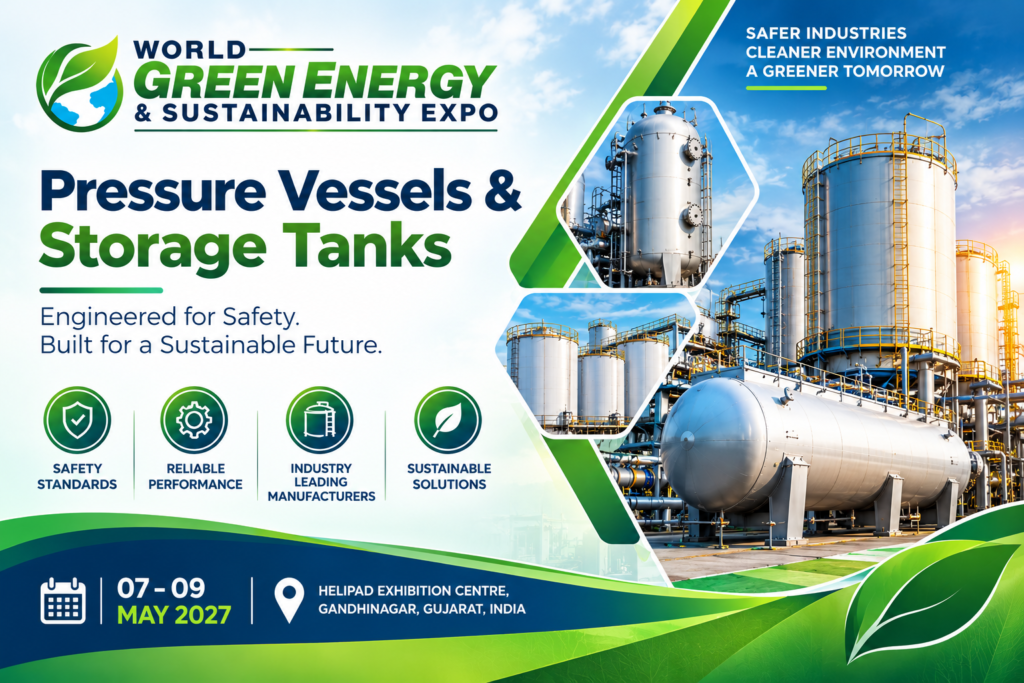
The Leading Manufacturers – Global and Indian Companies
The leading companies in the global pressure vessel market are Larsen and Toubro Limited, Mitsubishi Heavy Industries, Ergil, Doosan Heavy Industries and Construction, McDermott, IHI Corporation, Hitachi Zosen, Morimatsu, L&T, KNM, SPVG, Mersen, JSW, Belleli, and others.
Larsen and Toubro
Larsen and Toubro’s Heavy Engineering division at Hazira, Gujarat, is India’s most technically sophisticated and internationally recognized pressure vessel and process equipment fabricator – capable of designing and manufacturing the largest, most complex, and most technically demanding process vessels and reactors for the global oil and gas, chemical, and nuclear industries.
L&T Heavy Engineering’s scope includes hydrocracker reactor vessels weighing up to 2,000 tonnes, nuclear reactor pressure vessels for India’s pressurized heavy water reactors, cryogenic liquefaction heat exchangers, and ultra-high-pressure polyethylene autoclave reactors. Its ASME U, U2, and U3 stamp, CE marking under PED, and IRIS certification for nuclear components collectively represent the broadest code certification portfolio of any Indian fabricator – enabling market access across North American, European, and nuclear markets that no other Indian company matches.
L&T’s Hazira facility in Gujarat – located within the Hazira industrial port cluster approximately 25 kilometers from Surat – is one of the most comprehensive heavy engineering manufacturing campuses in Asia, with pressure vessel fabrication capacity, ship-building infrastructure, offshore platform construction capability, and specialized transportation and load-out infrastructure for oversized and heavy component delivery.
Godrej Process Equipment
Godrej Process Equipment – a division of the Godrej Group – is India’s most respected fabricator of high-specification process equipment for the oil and gas, chemical, nuclear, and defence sectors. Its facility at Khalapur, Maharashtra, manufactures shell and tube heat exchangers, pressure vessels, columns, and reactors to the highest code standards including ASME U, U2, and U3 stamps.
Godrej’s quality reputation – built on decades of precision manufacturing for demanding specifications including nuclear pressure vessel components for BARC and NPCIL – gives it a premium market position that commands above-average realizations relative to competitors who serve primarily standard-specification markets.
BHEL (Bharat Heavy Electricals Ltd)
Bharat Heavy Electricals Limited’s Heavy Plate and Vessels Plant at Visakhapatnam, Andhra Pradesh, is India’s largest state-owned pressure vessel and process equipment manufacturer – fabricating boiler pressure parts, nuclear reactor components, high-pressure chemical equipment, and industrial pressure vessels across India’s public sector power and chemical industries.
BHEL’s public sector status gives it preferential access to NTPC, NPCIL, and state utility procurement – the customer base that accounts for the majority of India’s largest individual pressure vessel and boiler procurement programs. Its heavy forging, heat treatment, and machining capabilities for large-scale components complement L&T and Godrej’s fabrication capabilities in the premium segment.
Walchandnagar Industries
Walchandnagar Industries is one of India’s oldest and most respected heavy engineering companies, with pressure vessel and process equipment manufacturing capability dating back to the 1920s. Its products serve the sugar, chemical, fertiliser, and power generation sectors with a range of vessels from small batch reactors through large distillation columns for continuous process operations.
JSW Steel
JSW’s involvement in the pressure vessel market comes through its capacity to supply the specialized steel plate materials – in grades including SA516, SA537, and various chrome-molybdenum alloys – that pressure vessel fabrication requires. Domestic steel availability at competitive prices directly improves the cost competitiveness of Indian fabricators on international tenders where imported European or Japanese material previously created cost disadvantage.
International Companies With India Presence
Several global pressure vessel and storage tank manufacturers have established Indian manufacturing or partnership presence.
Mitsubishi Heavy Industries serves India’s large-scale petrochemical and nuclear markets through project-specific supply arrangements. Doosan Heavy Industries – South Korea’s largest pressure vessel fabricator – has completed vessel supply for Indian refinery and petrochemical projects through direct export and local partnering.
Ergil – a Turkish industrial equipment manufacturer specializing in storage tanks and pressure vessels – has been active in Indian infrastructure projects, particularly petroleum storage and terminal equipment. Its API 650 storage tank fabrication capability and competitive positioning within the emerging markets price range make it a relevant reference for Indian buyers evaluating international versus domestic fabrication alternatives.
KNM Group from Malaysia serves the Asia-Pacific pressure vessel and process equipment market across oil and gas, petrochemical, and fertilizer applications – with Indian project references through its process equipment supply to Indian EPC contractors.
Fabrication Technology Trends Reshaping the Market
Automated Welding and Digital Fabrication
The integration of automated welding systems – submerged arc welding, flux-cored arc welding with robotic positioning, and orbital TIG welding for small-bore nozzles – is improving weld quality consistency, reducing inspection rejection rates, and enabling fabrication of complex geometries that manual welding would not achieve at acceptable quality. Digital fabrication planning – using 3D CAD models integrated with CNC plate cutting, forming, and fit-up measurement – reduces the material waste and rework that add cost and schedule delay to conventional hand-laid-out fabrication.
Advanced Non-Destructive Examination
Phased array ultrasonic testing – using electronically steered ultrasonic beam arrays rather than single-element conventional transducers – provides dramatically improved coverage, sensitivity, and productivity for weld examination compared to conventional ultrasonic testing, enabling examination of nozzle-to-shell welds and complex geometry joints that were previously accessible only by radiography. TOFD (Time of Flight Diffraction) provides accurate through-thickness crack sizing that conventional ultrasonic testing cannot reliably achieve.
Hydrogen-Service Material Development
The development of hydrogen-service-compatible pressure vessel steels – grades with sufficient resistance to hydrogen embrittlement at high hydrogen partial pressures to maintain structural integrity in hydrogen compression and storage service – is one of the most commercially significant material technology developments in the pressure vessel market. ASME BPVC Section VIII Division 3 and the emerging ASME KH standard for hydrogen vessels are providing the design code framework for hydrogen-service pressure vessel qualification that fabricators and buyers need for green hydrogen infrastructure projects.
Digital Inspection and Remote Monitoring
Digital radiography – replacing film radiography with digital detector arrays that provide immediate, computer-processed images at higher sensitivity and lower personnel radiation exposure – is becoming the standard for pressure vessel weld examination in modern fabrication shops. Remote digital radiography interpretation – transmitting digital images to specialist interpretation centers for expert review – improves examination quality while reducing the cost of specialist inspection personnel at remote fabrication sites.
The Business Opportunity – Segment by Segment
For pressure vessel manufacturers, the Indian market opportunity in 2027 breaks down across clearly defined procurement segments with different technical requirements, buyer profiles, and competitive dynamics.
The green hydrogen and green ammonia infrastructure segment – driven by National Green Hydrogen Mission projects including ACME’s Gopalpur facility, AM Green’s Kakinada project, and NTPC’s Pudimadaka hub – requires high-pressure hydrogen vessels, refrigerated ammonia storage bullets, and the ultra-high-purity stainless steel gas handling systems that green hydrogen quality specifications demand. This segment requires fabricators with ASME U2 or equivalent certification and demonstrated hydrogen-service material qualification.
The ethanol distillery segment – with hundreds of 100 to 750 KLPD grain-based and molasses-based plants under active construction – requires fermentation tanks, distillation column vessels, evaporators, and effluent treatment equipment at scales and specifications accessible to mid-tier Indian fabricators without the highest-level international code certification. This segment is the most immediately accessible domestic procurement opportunity for regional pressure vessel fabricators across UP, Maharashtra, and Gujarat.
The pharmaceutical and biotech segment – driven by PLI scheme incentives – requires high-specification hygienic-grade stainless steel vessels, ASME BPE (Bioprocessing Equipment) compliant design for sterile processing, and the documentation and validation support that FDA-regulated pharmaceutical manufacturing demands. This is the highest-margin domestic segment for fabricators with appropriate code certification and quality management systems.
The petrochemical and refinery segment – driven by new complex construction and scheduled plant turnarounds across India’s growing refinery and petrochemical fleet – requires the largest and most technically demanding individual vessels, with Godrej Process Equipment and L&T Heavy Engineering as the dominant domestic fabricators and international competition from Korean, European, and Chinese specialists on the largest contracts.
Why World Green Energy & Sustainability Expo (WGES 2027) Is the Right Platform for India’s Pressure Vessel Industry
Pressure vessels and industrial storage tanks sit at the direct center of every industrial process sector that World Green Energy & Sustainability Expo (WGES 2027) serves – from green hydrogen and green ammonia projects that need high-pressure storage vessels, to ethanol distilleries that need fermentation and distillation vessels, to biogas plants that need compression vessels, to industrial boiler operations that need IBR-compliant steam drum and header pressure parts, to chemical and pharmaceutical plants that need specialized process and storage vessels.
World Green Energy & Sustainability Expo (WGES 2027)’s industrial equipment exhibitor community directly connects pressure vessel manufacturers and fabricators with the green energy project developers, chemical and pharmaceutical plant operators, distillery developers, and biogas plant engineers who are making capital equipment procurement decisions that collectively represent billions of rupees of pressure vessel and storage tank purchasing annually.
Gujarat – World Green Energy & Sustainability Expo (WGES 2027)’s host state – is home to India’s most important pressure vessel manufacturing geography. L&T’s Heavy Engineering facility at Hazira, Surat, is one of the most sophisticated pressure vessel fabrication campuses in Asia. The Dahej industrial cluster is India’s largest single concentration of pressure vessel-using chemical and petrochemical plants. ONGC’s offshore operations from the Surat region require pressure vessel supply for both onshore processing facilities and offshore platform equipment. And Gujarat’s rapidly expanding green hydrogen and green ammonia project pipeline – including AM Green’s planned Kandla production facility adjacent to the Deendayal Port Green Hydrogen Hub – creates new pressure vessel procurement demand directly in World Green Energy & Sustainability Expo (WGES 2027)’s host geography.
For pressure vessel fabricators seeking to reach India’s green energy project developers, for international manufacturers evaluating Indian partnerships and joint ventures, for material suppliers targeting India’s growing pressure vessel fabrication industry, for inspection and certification bodies providing ASME, IBR, and PESO compliance services, and for engineering companies providing pressure vessel design and analysis services across India’s expanding industrial base – World Green Energy & Sustainability Expo (WGES 2027) brings all of these commercial conversations together in India’s most industrially concentrated and most commercially active state.