
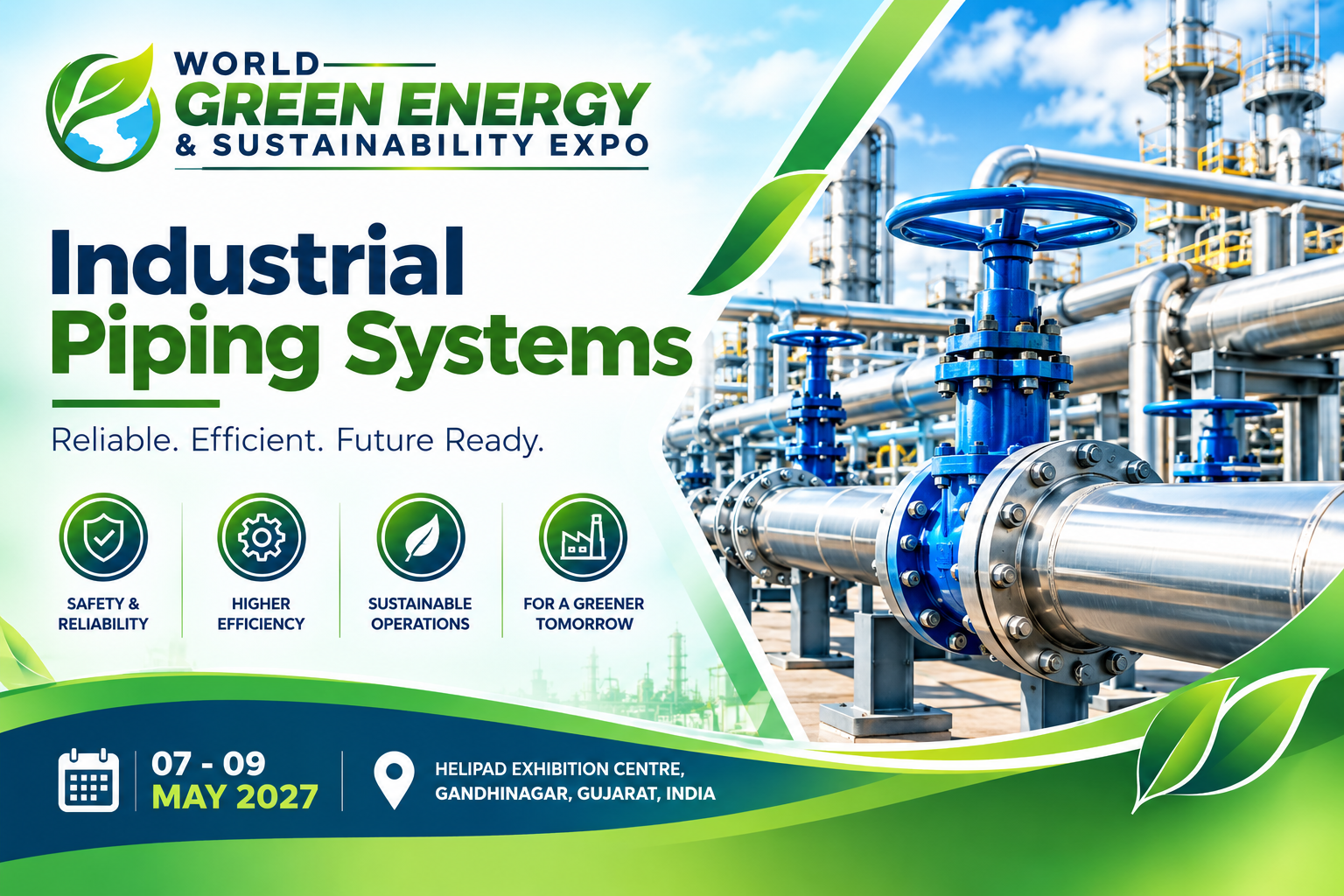
The Arterial System of Every Industrial Facility – and a Market Most Procurement Engineers Underestimate
Ask any process plant engineer what percentage of a new industrial facility’s capital cost is represented by piping – and the answer will consistently surprise anyone who has not designed a process plant. In a typical chemical plant, piping accounts for 20 to 30% of total erected cost. In a pharmaceutical manufacturing facility, 25 to 35%. In an oil refinery, 15 to 25%. In a green hydrogen production facility, 20 to 30%.
Those numbers reflect a simple physical reality: every liter of fluid, every kilogram of gas, every cubic meter of steam that an industrial facility processes must travel through pipe from source to destination – from pump discharge to heat exchanger, from reactor outlet to distillation column, from storage tank to filling station, from boiler to process, from process to effluent treatment. The piping system is the arterial and venous infrastructure of the industrial facility, and like the human cardiovascular system, the entire operation fails if any section of it fails.
The global pipes and pipe fittings market reached USD 336.87 billion in 2025 and will grow to USD 366.32 billion in 2026 at a CAGR of 8.7%, reaching USD 520.57 billion in 2030 at a CAGR of 9.2%. The global piping and fittings market size is calculated at USD 356.18 billion in 2025 and is predicted to increase from USD 367.93 billion in 2026 to approximately USD 512.62 billion by 2035, expanding at a CAGR of 3.71% from 2026 to 2035.
The Piping Systems Market valued at USD 218.6 billion in 2026 is projected to expand to USD 382.05 billion by 2035, advancing at a 6.40% CAGR over the analysis window. The global pipe fittings market size stands at USD 19.5 billion in 2025 and is expected to register a CAGR of 5.7% from 2026 to 2034, reaching a projected value of USD 32.1 billion by the end of the forecast period.
For piping system manufacturers, pipe fitting suppliers, insulation companies, pipe support fabricators, welding and joining technology providers, inspection and certification bodies, and the plant engineers, EPC contractors, and procurement professionals who specify, procure, and install industrial piping – this is the complete, data-backed, commercially specific guide.
The Global Industrial Piping Market – Numbers, Structure, and Growth
The piping and fittings market encompasses an extraordinarily diverse range of products – from the smallest 6 millimeter stainless steel tube in a pharmaceutical clean room through the 1,200 millimeter diameter carbon steel header pipe in a large power plant condenser, across every material, pressure rating, temperature range, and application the industrial world requires.
World demand is structurally supported by two distinct pillars: replacement and renovation of aging industrial and municipal water infrastructure, and greenfield capacity expansion in high-technology sectors. The market is characterized by a wide dispersion of specifications, with the high-purity segment serving semiconductors, pharmaceuticals, and advanced manufacturing trading at a premium of 50 to 150% over standard industrial grades.
The high-purity and engineered segment is forecast to grow at a 7 to 10% CAGR, significantly outpacing the broader industrial average. This growth is predicated on continued global fab construction, the expansion of data center liquid cooling, and the build-out of hydrogen and carbon capture infrastructure. Penetration of advanced plastics will continue, replacing metal in harsh chemical environments where corrosion resistance and purity are paramount.
By material, steel accounted for a revenue of USD 6,626.5 million in 2024 within the pipe fittings segment – the dominant material by value for industrial applications. Plastic pipes account for over 60% of installations globally by unit count, while metal pipes represent nearly 35% of total use by unit count – the divergence between value and unit count reflecting the premium pricing of metal pipe over plastic for equivalent installation length.
By end use, industrial accounted for the largest revenue share of 43.8% in 2024, driven by product use in oil and gas, chemical processing, power plants, food and beverage, pharmaceuticals, and manufacturing industries.
By region, Asia Pacific dominated with the largest market share. Municipal water infrastructure upgrades across North America, Europe, and Asia are accelerating adoption of corrosion-resistant materials. Demand is concentrating in China’s industrial corridor cities, where petrochemical expansion and district heating networks require high-pressure metallic systems.
By product type within pipe fittings, elbows hold the largest product-type share at approximately 22.5% of the 2025 market, driven by high consumption in oil and gas, chemical processing, and water treatment, where complex pipeline layouts require frequent directional changes. Tees, accounting for around 18.0%, are indispensable for creating branch lines.
Piping Materials – The Complete Selection Information
The selection of piping material is the most consequential engineering decision in any piping system design – because material selection determines the system’s compatibility with the process fluid, its service life, its maintenance requirements, its regulatory compliance, and its contribution to total lifecycle cost. Specifying the wrong material creates corrosion failures, contamination incidents, and safety events that persist for the piping system’s entire operational life.
Carbon Steel – The Industrial Workforce
Carbon steel piping – in grades including ASTM A106 for seamless high-temperature pipe, ASTM A53 for general purpose welded and seamless pipe, and API 5L for pipeline service – is the dominant material for industrial process piping where operating temperatures are above approximately minus 29 degrees Celsius, the fluid is not corrosive to carbon steel, and operating pressure is within the carbon steel pressure-temperature rating at the operating temperature.
Carbon steel’s commercial dominance reflects its combination of high strength, good weldability, wide availability from multiple domestic manufacturers, competitive price per unit of pressure-containing capacity, and the depth of engineering experience and inspection knowledge accumulated across a century of industrial service. For a petrochemical plant, a power station, a fertilizer complex, or a general industrial facility operating on non-corrosive fluids, carbon steel is the default specification from which engineers deviate only when a specific reason – corrosion, temperature, purity – makes an alternative material necessary.
The limitations of carbon steel are equally well-understood. Aqueous corrosion from moisture-bearing fluids requires either external coating and cathodic protection or a corrosion allowance in the wall thickness design that is consumed progressively through the service life. High-temperature service above approximately 427 degrees Celsius causes carbon steel to suffer creep – slow deformation under sustained load – requiring transition to chrome-molybdenum alloy steel. And service temperature below approximately minus 29 degrees Celsius causes carbon steel to transition from ductile to brittle fracture mode, requiring either impact testing of specific heats for lower temperature service or transition to low-alloy or stainless materials.
Stainless Steel – The Corrosion-Resistant Standard
Austenitic stainless steel – primarily grades 304, 304L, 316, and 316L – is the most widely specified corrosion-resistant piping material for chemical, pharmaceutical, food, dairy, and high-purity industrial applications. The addition of chromium and nickel to the steel creates a passive oxide film on the surface that resists corrosion from most aqueous environments, dilute acids, and organic solvents that would rapidly corrode carbon steel.
Grade 316 and 316L – with 2 to 3% molybdenum addition compared to 304 – provide superior resistance to chloride-containing environments including seawater, bleaching solutions, and many pharmaceutical processing streams. For pharmaceutical and biotechnology applications, electropolished 316L stainless steel meeting ASME BPE (Bioprocessing Equipment) surface finish requirements is the mandatory specification – where internal surface roughness Ra below 0.25 micrometers prevents microbial colonization and enables complete cleaning and sterilization through clean-in-place and steam-in-place procedures.
Duplex stainless steels – combining austenitic and ferritic microstructures in approximately equal proportions – provide higher strength than austenitic grades alongside superior resistance to chloride stress corrosion cracking that limits austenitic stainless steel in aggressive seawater and process brine environments. Super-duplex grades including 2507 and Zeron 100 extend chloride resistance further for the most demanding offshore and chemical processing applications.
Alloy Steel – The High-Temperature Process Piping Standard
Chrome-molybdenum alloy steels – primarily P11 (1.25% Cr, 0.5% Mo), P22 (2.25% Cr, 1% Mo), P91 (9% Cr, 1% Mo), and P92 (9% Cr, 0.5% Mo, 1.8% W) – provide the elevated-temperature strength, creep resistance, and oxidation resistance required for high-temperature steam piping, high-temperature hydrocracker piping, and catalytic reformer piping where carbon steel’s creep and oxidation characteristics are inadequate.
P91 and P92 – the advanced ferritic-martensitic grades – have transformed high-temperature piping design over the past two decades by enabling significantly thinner wall designs at temperatures up to 650 degrees Celsius compared to the older P22 specification. India’s power generation sector – where NTPC and state utilities are specifying supercritical and ultra-supercritical steam conditions in new power plants – is one of the most active procurement markets for P91 and P92 piping globally.
HDPE and Polymer Piping – The Water and Chemical Corrosion-Resistant Option
High-density polyethylene pipe – in pressure ratings from PN4 through PN16 and diameters from 16 millimeters through 2,000 millimeters – has become the dominant material for municipal water supply, gas distribution networks, irrigation systems, and chemical drainage applications where its corrosion immunity, flexibility, and fusion-welded joint integrity provide operational advantages over metallic alternatives.
HDPE’s primary advantages for industrial applications are complete immunity to internal and external aqueous corrosion, flexibility that accommodates ground settlement and seismic movement without rigid expansion joints, light weight compared to steel or cast iron of equivalent pressure rating, and electrofusion or butt-fusion joint technology that creates joints stronger than the parent pipe material. Its limitations are lower operating temperature – maximum approximately 60 degrees Celsius for pressure service – and significantly lower stiffness and strength than metallic pipe, requiring different support spacing and different pressure rating calculation approaches.
Plastic pipes account for over 60% of installations globally, driven by the urban water infrastructure and construction sectors where large volumes of small-diameter, moderate-pressure water piping represent the majority of installation work.
GRP and Fiberglass-Reinforced Plastic – The Chemical Industry Specialist
Glass-reinforced plastic – also called fiberglass or GRP – piping provides an exceptional combination of corrosion resistance and moderate strength for chemical process applications where neither metallic alloys nor thermoplastic materials provide acceptable performance. GRP piping handles concentrated sulphuric acid, concentrated caustic soda, wet chlorine, and many other aggressive chemicals that would rapidly corrode metallic materials and that are above the temperature limit of thermoplastic alternatives.
GRP piping manufactured to ASTM D2996 (filament-wound) or ASTM D2310 standard is the preferred specification for chemical plant effluent collection, scrubber inlet piping handling acid gases, and cooling water distribution in aggressive industrial atmospheres. India’s chemical industry in Gujarat and Maharashtra – particularly the chlor-alkali, dye intermediate, and acid manufacturing clusters – is one of the largest single markets for GRP process piping in Asia.
Copper and Brass – The Utility Services Standard
Copper and copper alloy piping and tubing serve industrial utility applications – compressed air, instrument air, nitrogen, and chilled water – as well as domestic water and medical gas applications where copper’s antimicrobial properties, easy workmanship, and fully developed fitting and joining systems make it the material of preference. Brass fittings – for threaded connections in compressed air, water, and general utility service – are one of the highest-volume industrial pipe fitting categories globally.
PTFE-Lined and FRP-Lined Piping – The Aggressive Chemical Service Solution
For the most aggressive chemical service environments – concentrated hydrofluoric acid, fuming sulphuric acid, and highly oxidizing or reducing chemical streams – carbon steel pipe lined with PTFE, polypropylene, or rubber provides a cost-effective alternative to exotic alloys. The steel shell provides structural strength at competitive cost, while the lining provides the chemical resistance that the metal alone cannot achieve.
The Complete Fittings Information – Every Type Every Plant Engineer Must Know
Pipe fittings are the components that connect straight pipe sections into complete piping systems – changing direction, branching flow, reducing diameter, providing connections to equipment nozzles, and enabling system isolation and maintenance. Elbows hold the largest product-type share at approximately 22.5% of the 2025 market.
Elbows – Direction Change
Elbows redirect piping from one direction to another – available in 45-degree and 90-degree angles, in long-radius (1.5D) and short-radius (1D) configurations (where D is the nominal pipe size), in standard and reducing bore versions, and in every material and pressure class. Long-radius elbows are preferred for most process piping because their gentler radius creates lower pressure drop and lower erosion potential than short-radius alternatives – particularly important for high-velocity gas streams and slurry service where particulate abrasion on tight radius bends is a consistent failure mode.
Tees and Laterals – Flow Branching
Tees – T-shaped fittings with one branch outlet perpendicular to the run – are the standard fitting for flow branching in industrial piping. Equal tees have all three ends the same diameter; reducing tees have a smaller branch outlet. Laterals provide a 45-degree branch angle rather than 90 degrees – preferred for slurry and high-velocity service where a perpendicular branch creates turbulence and erosion at the junction.
Reducers – Diameter Transition
Concentric reducers – where the centerline of the large and small ends aligns – are used for vertical piping runs and for applications where the centerline elevation of the pipe must be maintained through the diameter change. Eccentric reducers – where the bottom or top of the fitting is flat – are used for horizontal piping where bottom-flat (flat on the bottom) installation allows complete liquid drainage and prevents vapor pockets, and top-flat installation prevents liquid accumulation at pumps. The choice between concentric and eccentric reducers at pump suctions is one of the most commercially significant and most frequently mis-specified details in industrial piping design – a concentric reducer at a horizontal pump suction creates a vapor pocket that causes cavitation, pump damage, and reduced service life.
Flanges – The Bolted Connection System
Flanges are the bolted, gasketed connection system that enables piping to be assembled from factory-fabricated spools and that provides demountable connections for equipment, valves, instruments, and piping sections that require periodic removal for maintenance. ASME B16.5 and ASME B16.47 govern flange dimensions and pressure ratings for nominal pipe sizes from ½ inch through 60 inches – the standards that determine the dimensions, bolt patterns, and pressure-temperature ratings for every flanged connection in ASME-code piping.
Weld-neck flanges – where the flange hub is butt-welded to the pipe end – are the strongest and most reliable flanged connection type for high-pressure, high-temperature, and cyclic service. Slip-on flanges – where the pipe end slips through the flange bore before fillet welding – are less expensive and easier to align during installation but have lower strength and fatigue resistance than weld-neck designs. Socket-weld flanges are used for small bore piping below approximately 50 millimeters where the socket provides positive pipe positioning before welding. Blind flanges close the end of a pipe system or vessel nozzle.
Gaskets – The Sealing Critical Component
The gasket is the most maintenance-intensive and most frequently underspecified component in any flanged piping system – the single compression element that determines whether a flanged joint seals reliably throughout its service life. Flat ring gaskets in spiral-wound, ring type joint, or full-face configurations must be selected for full compatibility with the process fluid, operating temperature, operating pressure, and the number of bolt-up and release cycles anticipated.
Spiral-wound gaskets – with alternating layers of metal winding and filler material in a stainless steel cage – are the standard high-integrity gasket for process piping in the oil and gas, chemical, and power generation sectors. Ring type joint gaskets – solid metal rings in octagonal or oval cross-section – provide the highest-integrity seal for the highest-pressure flanged connections above ASME Class 900 rating. PTFE gaskets – compressed pure PTFE or filled PTFE grades – provide chemical resistance for corrosive service applications where metallic or standard elastomeric gaskets would be attacked by the process fluid.
Piping Standards – The Regulatory Framework Every Engineer Must Know
Industrial piping standards are not optional reading for procurement engineers – they are mandatory technical frameworks that determine design requirements, material specifications, fabrication quality, testing requirements, and inspection obligations for every piping system in regulated industrial service.
ASME B31.3 – Process Piping
ASME B31.3 is the most widely referenced and internationally adopted piping design standard for chemical plants, petroleum refineries, pharmaceutical facilities, and general process industries. It governs the design, materials, fabrication, assembly, examination, and testing of piping in process plant service.
ASME B31.3 defines fluid service categories that determine the required examination and testing requirements – from Category D (non-flammable, non-toxic, at relatively low temperature and pressure) through Category M (fluid service for which a single leak might cause serious harm) and High-Pressure Fluid Service – with each category specifying minimum NDE examination, hydrostatic test pressure, and joint examination requirements that become progressively more stringent as the consequence of failure increases.
ASME B31.1 – Power Piping
ASME B31.1 governs piping used in electric power generating stations, in industrial and institutional plants, geothermal heating systems, and central and district heating and cooling systems. It applies to steam, water, oil, gas, and air systems up to 1,500 psi and a range of temperatures that encompasses virtually all utility piping in power and process plants.
ASME B31.4 and B31.8 – Pipeline Transportation
ASME B31.4 governs pipeline transportation systems for liquid hydrocarbons and other liquids. ASME B31.8 governs gas transmission and distribution piping systems. These standards govern the design, materials, construction, testing, and operation of the cross-country pipeline infrastructure that transports oil, natural gas, LPG, and ethanol across India and globally.
EN 13480 – European Metallic Industrial Piping
EN 13480 is the European standard governing metallic industrial pipework for process plant and utilities across EU member states. Its five parts cover materials, design, fabrication, testing, inspection, and insulation – covering the same scope as ASME B31.3 within the European regulatory framework. For Indian manufacturers supplying piping components to European projects, EN 13480 compliance alongside applicable pressure equipment directive conformity assessment is the commercial prerequisite.
IS 1239 and IS 3589 – Indian Standards for Piping
Indian Standard IS 1239 governs mild steel tubes, tubulars, and other wrought steel fittings – the standard that governs the design and dimensions of general-purpose carbon steel pipe in Indian installations. IS 3589 covers steel pipes for water and sewage applications. For procurement of Indian-manufactured piping under IBR or for domestic industrial applications not specifying international standards, IS compliance is the baseline regulatory requirement.
ASME BPE – Bioprocessing Equipment
ASME BPE – Bioprocessing Equipment standard – governs the design, materials, fabrication, and inspection of equipment and systems used in the manufacture of biopharmaceuticals, pharmaceutical products, and other high-purity products. Its piping provisions cover dimensional tolerances, surface finish requirements (Ra values in micrometers), inspection protocols, and documentation requirements that are mandatory for pharmaceutical and biotech manufacturing piping worldwide.
ISO 15590 – Induction Bends and Fittings for Pipeline
ISO 15590 governs induction bends, fittings, and flanges for pipeline transportation systems – the standard covering the specialized pipeline components used in long-distance oil and gas pipeline construction that must meet the same toughness, dimensional, and testing requirements as the pipe itself.
Piping System Design – The Engineering Principles Every Buyer Must Understand
Understanding the engineering principles behind piping system design enables procurement engineers and plant managers to evaluate vendor proposals more critically, specify their requirements more precisely, and avoid the specification errors that create operational problems for the piping system’s entire service life.
Pressure Rating and Schedule
Pipe wall thickness – and by extension, pressure rating – is specified by the Schedule system for ASME pipe (Schedule 5, 10, 20, 40, 80, 120, 160, and XXS – Double Extra Strong) or by actual wall thickness dimensions. Schedule 40 is the most widely used schedule for general industrial pipe, providing adequate pressure rating for moderate service conditions at competitive cost. Schedule 80 and heavier schedules are required for high-pressure service, corrosion allowance applications where wall thickness will be consumed over the service life, and threaded connections where the thread engagement removes material from the outside of a schedule 40 pipe.
Thermal Expansion and Stress Analysis
Every piping system that operates at a temperature different from its installation temperature expands or contracts as it reaches operating conditions. A 100-meter run of carbon steel pipe at 200 degrees Celsius above installation temperature expands by approximately 240 millimeters – nearly a quarter of a meter. This expansion must be accommodated by the piping system design through expansion loops, bellows expansion joints, or slip expansion joints, or it will generate stress in the pipe and loads on connected equipment nozzles that can cause fatigue failure, nozzle flange leaks, or pump alignment distortion.
Formal piping stress analysis – using software including CAESAR II, PIPEPLUS, and AutoPIPE to model the piping system’s behavior under thermal, pressure, weight, and seismic loading – is mandatory under ASME B31.3 for critical process piping and good engineering practice for all pressure piping above minimal service conditions. For India’s green hydrogen, pharmaceutical, and chemical facilities where process safety incidents attract regulatory scrutiny, documented stress analysis is the standard of care that separates technically robust designs from those that are merely cost-competitive on initial specification.
Water Hammer and Surge Analysis
Rapid valve closure in liquid piping systems creates pressure waves – called water hammer or hydraulic surge – that propagate through the pipe at the speed of sound in the liquid, creating pressure peaks that can be many times the normal operating pressure. Water hammer is the cause of a significant fraction of piping failures in water supply, pumping station, and process plant piping – and it is preventable through surge analysis during design and through appropriate valve closure rate specification, surge tank installation, or slow-closing check valve specification.
Pipe Supports and Hangers
Every pipe must be supported at intervals that prevent excessive deflection under its own weight and the weight of its contents – and the support spacing and type must accommodate the thermal movements that the pipe undergoes as it heats and cools through its operating cycle. ASME B31.3 and ASME B31.1 both specify maximum allowable support spacing for pipes of different sizes and materials, and ASME MSS SP-58 governs the design of pipe supports and hangers.
Installation Best Practices – The Complete Field Information
The quality of a piping system’s installation determines its safety, reliability, and maintenance cost as much as the quality of its design and materials selection. Poor installation – misaligned flanges, inadequate heat treatment of high-alloy welds, incorrect gasket installation, inadequate hydrostatic testing – creates problems that neither the best piping design nor the highest-quality materials can prevent.
Welding and Joint Quality
Welding is the primary joint method for industrial process piping in carbon steel, alloy steel, and stainless steel above approximately 50 millimeters nominal bore, and the quality of welding is the most commercially critical installation activity in any piping project. Weld quality requirements under ASME B31.3 are specific and non-negotiable – qualified welding procedures established by procedure qualification records (PQR), welder performance qualification records (WPQ) documenting each welder’s demonstrated ability to produce acceptable welds, and weld examination records documenting the NDE results for each weld.
Post-weld heat treatment – controlled heating and cooling of completed weld joints in chrome-molybdenum alloy steels, thick carbon steel, and other susceptible materials – is mandatory under ASME B31.3 for specific material and thickness combinations to relieve welding residual stresses that would otherwise create stress corrosion cracking susceptibility. PWHT is performed in controlled furnaces or through local resistance or induction heating, and its time-temperature cycle must be documented and retained as part of the piping system quality record.
Flanged Joint Assembly
Flanged joint assembly is the most frequently incorrectly performed and most frequently audited piping installation activity – and poor flanged joint assembly is the primary cause of the fugitive emission leaks that CPCB and international environmental regulations increasingly regulate. Correct flanged joint assembly requires clean and undamaged flange faces, correct gasket selection and placement (centered, undamaged, correct grade for service), calibrated torque wrenches used to the correct torque specification for the bolt material and gasket type, and cross-pattern bolt tightening in at least four passes to achieve uniform gasket compression.
Pre-startup leak testing – hydrostatic testing to 1.5 times design pressure per ASME B31.3 requirements, or pneumatic testing at 1.1 times design pressure where hydrostatic testing is impractical – is the acceptance criterion for commissioned piping before process fluid introduction. Hydrostatic test records, including test pressure, test medium, hold duration, and examiner certification, must be retained as permanent records for the piping system’s regulatory compliance documentation.
Piping Cleanliness and Flushing
Every process piping system must be cleaned before introduction of the process fluid – removing construction debris, weld spatter, rust, and mill scale that would otherwise damage downstream equipment, contaminate products, or cause control valve trim erosion. Flushing protocols – using water, air, nitrogen, or chemical cleaning depending on service – are specified for each piping system as part of the commissioning procedure, and the completion of flushing is a mandatory pre-commissioning hold point in ISO quality management systems for process plant construction.
For pharmaceutical piping, the cleaning validation protocol – demonstrating that the cleaning procedure leaves residual contamination below specified acceptance limits – is a regulatory requirement under FDA and EMA GMP that must be documented and approved before the piping system is accepted for use.
Insulation and Heat Tracing
Piping insulation reduces heat loss from hot process streams – reducing energy consumption and maintaining process fluid above minimum temperature limits – and prevents surface temperatures from exceeding safe-touch limits on hot systems or from falling below freezing on cold process streams. Calcium silicate, mineral wool, and foam glass are the standard insulation materials for hot process piping above ambient temperature. Polyurethane foam and cellular glass provide the vapor barrier performance required for cold insulation below ambient temperature.
Electric heat tracing – resistance heating cables applied to the pipe exterior beneath the insulation – maintains pipe temperature above the minimum required for process fluid viscosity management, freeze protection, or condensation prevention in steam tracing applications. Digital self-regulating heat tracing cables that increase output power as temperature falls and reduce it as temperature rises eliminate the temperature control complexity of conventional constant-wattage systems and reduce energy consumption.
Green Energy Piping Applications – The Frontier of Piping Technology
The transition to green energy infrastructure is creating entirely new and technically demanding piping system requirements that the conventional industrial piping supply chain is adapting to serve.
Green Hydrogen Piping
Hydrogen piping presents the most technically demanding requirements of any process piping application – exceeding even the demands of most chemical and pharmaceutical service. Hydrogen’s very small molecular size enables permeation through polymer seals and grain boundaries in carbon steel that larger molecules cannot penetrate. Hydrogen embrittlement – the degradation of steel mechanical properties through absorption of atomic hydrogen – is a well-documented failure mechanism for high-strength carbon steels in high-pressure hydrogen service.
Materials for high-pressure hydrogen piping must meet specific requirements for susceptibility to hydrogen-induced cracking, stress corrosion cracking in hydrogen environments, and permeation resistance. ASME B31.12 – Hydrogen Piping and Pipelines – is the specific design code for hydrogen service, governing both industrial hydrogen piping and hydrogen pipeline systems with provisions that reflect the specific hazards and material requirements of hydrogen service.
316L stainless steel is the most widely specified material for high-pressure hydrogen service up to approximately 700 bar – used for hydrogen vehicle fueling stations, hydrogen production facility high-pressure piping, and hydrogen compression interstage systems. Inconel 625 and Hastelloy C276 provide hydrogen resistance for the highest-pressure applications and most aggressive service environments.
Green Ammonia Piping
Green ammonia – stored at minus 33 degrees Celsius and atmospheric pressure in refrigerated systems, or at ambient temperature under approximately 8 to 10 bar pressure – requires piping material that maintains ductility at cryogenic temperatures for refrigerated service, and that is resistant to ammonia stress corrosion cracking in pressurized service. Low-alloy steels and carbon steels susceptible to ammonia stress corrosion are specifically excluded from pressurized ammonia service under API and ASME codes.
Carbon steel with fully deoxidized (killed) specification and Charpy impact testing at minus 40 degrees Celsius is the standard for refrigerated ammonia piping. For the highest-specification green ammonia export projects – including AM Green’s Kakinada facility and ACME’s Gopalpur project – piping material selection and joining procedures for the ammonia service circuits are among the most critically reviewed technical deliverables in the EPC contract.
Biogas and Biomethane Piping
India’s SATAT program is creating a rapidly expanding procurement market for biogas and compressed biogas piping – from the low-pressure raw biogas distribution piping within AD plant buildings through the high-pressure CBG compression and storage piping rated for 250 bar service. Carbon steel with appropriate corrosion inhibition for the wet, mildly acidic raw biogas environment serves the low-pressure section. High-pressure carbon steel seamless pipe meeting ASTM A106 Grade B or API 5L Grade X52 serves the compression discharge and storage sections.
Carbon Capture Piping
Post-combustion carbon capture systems introduce highly corrosive amine solvent circuits that require piping material selection specifically addressing amine degradation product corrosion – including acetate, format, oxalate, and heat stable salts that accumulate in the capture solvent over time and create aggressive corrosion conditions in carbon steel piping. Carbon steel with higher corrosion allowances, stainless steel for amine concentration sections, and lined pipe for the most aggressive amine chemistry streams are the specification approaches being adopted in India’s pilot carbon capture projects.
India’s Industrial Piping Market – The Specific Opportunity
India’s piping market is one of the fastest-growing in Asia, driven by infrastructure investment at multiple simultaneous scales – from the Jal Jeevan Mission’s rural water supply piping procurement through the chemical corridor expansion in Gujarat and Maharashtra to the green hydrogen and green ammonia project pipeline under the National Green Hydrogen Mission.
The Jal Jeevan Mission – targeting 100% rural household tap water connections – is the largest single piping procurement program in India’s history, requiring HDPE, ductile iron, and CPVC piping across every state simultaneously. India’s ethanol distillery construction pipeline – hundreds of new 100 to 750 KLPD plants under active construction – requires stainless steel process piping, carbon steel utility piping, and HDPE effluent piping at each new facility. India’s pharmaceutical sector expansion under PLI scheme incentives requires ASME BPE-compliant 316L electropolished stainless steel piping for every new API and formulation manufacturing facility. India’s refinery modernization and petrochemical expansion programs require API and ASME-grade carbon steel, alloy steel, and stainless steel process piping at individual project values of hundreds of crores.
Gujarat – World Green Energy & Sustainability Expo (WGES 2027)’s host state – is India’s most piping-intensive industrial state. The Dahej PCPIR and Ankleshwar-Panoli chemical cluster collectively house thousands of piping kilometers in chemical service, requiring GRP, PTFE-lined, and high-alloy stainless steel piping that is among the most technically demanding in the country. L&T’s Hazira campus fabricates complex piping assemblies for offshore platforms and export projects. ONGC’s Hazira gas processing plant operates one of the most complex industrial piping systems in India’s onshore gas processing sector. And Gujarat’s expanding green energy infrastructure – at Khavda and across the state’s renewable energy corridor – is creating new piping procurement for solar plant balance-of-plant water systems, green hydrogen production cooling and process piping, and green ammonia synthesis circuits.
The Leading Piping Manufacturers – Global and Indian Companies
Key players operating in the global pipe fittings market include Mueller Industries, Georg Fischer, Tata Steel, Saint-Gobain, Aliaxis, RPM International, Eastman Chemical Company, Popular Pipes Group, Merck KGaA, and Metline Industries.
Leading companies in the piping systems market include Viega, Victaulic, Meide Group, Anvil International, Aliaxis, LESSO, Saint-Gobain, Allied Group, JM Eagle, RWC, McWane, GF Piping Systems, Hitachi, Mueller Industries, Charlotte Pipe, Uponor, Pipelife, and Aquatherm.
Georg Fischer Piping Systems
Georg Fischer Piping Systems – the industrial piping division of Georg Fischer AG – is the world’s most respected manufacturer of thermoplastic industrial piping systems in PVDF, PP, PE, ABS, and CPVC for chemical, pharmaceutical, semiconductor, and water treatment applications. Its PROGEF standard and SYGEF Plus PVDF piping systems are the reference specification for high-purity chemical and pharmaceutical service where corrosion resistance and purity performance are primary selection criteria. GF Piping Systems’ Indian operations serve the pharmaceutical, chemical, and water treatment markets with its complete piping system range alongside joining equipment and engineering support.
Victaulic
Victaulic is the world’s leading manufacturer of grooved mechanical pipe joining systems – couplings that grip grooved pipe ends to provide a bolted, gasket-sealed connection without welding or threading. Victaulic couplings enable rapid assembly and disassembly of piping without breaking into the pipe wall, making them particularly valuable for fire protection, HVAC, and industrial applications where system flexibility and maintenance access reduce lifetime operating cost.
Tata Steel
Tata Steel’s pipes division manufactures API 5L, IS 3589, and IS 4270 standard steel pipes for oil and gas, water supply, and general industrial applications. As India’s most internationally recognized steel company with an integrated manufacturing presence from steelmaking through pipe production, Tata Steel provides domestic customers with high-quality carbon steel pipe with material traceability and certification quality that matches international specifications at competitive delivered prices.
Metline Industries
Metline Industries is one of India’s most respected manufacturers and exporters of stainless steel, alloy steel, carbon steel, and duplex steel pipe fittings – covering elbows, tees, reducers, stub ends, flanges, and caps in both seamless and welded construction to ASME B16.9, ASME B16.11, BS 3799, and MSS SP-97 standards. Its export orientation – with deliveries to Middle Eastern, European, and Southeast Asian projects – demonstrates the quality and certification standards that Indian-manufactured fittings can achieve. For Indian engineering procurement teams evaluating domestic versus imported fittings for ASME B31.3 projects, Metline’s quality track record positions it as the primary domestic alternative to European and American fittings manufacturers.
Astral Limited
Astral Limited is India’s most recognized plastic piping brand, with market leadership in CPVC piping for hot and cold water supply in residential and commercial construction, PVC piping for drainage and irrigation, and a growing portfolio of industrial piping products for chemical and process industry applications. Its Ahmedabad headquarters and Gujarat manufacturing operations make it directly relevant to the World Green Energy & Sustainability Expo (WGES 2027) exhibitor community – a Gujarat-headquartered market leader in a product category that serves every construction, industrial, and agricultural sector represented at the expo.
Prince Pipes and Fittings
Prince Pipes and Fittings is one of India’s largest PVC and CPVC piping manufacturers, with production capacity across multiple Indian states serving the water supply, irrigation, and construction piping market. Its distribution depth – reaching tier-2 and tier-3 Indian cities – makes it the primary domestic supplier for the rural water supply infrastructure that Jal Jeevan Mission is creating at an unprecedented pace across every Indian state.
APL Apollo Tubes
APL Apollo Tubes is India’s largest structural steel tube manufacturer – producing hollow sections, ERW pipes, and structural tubes for construction, infrastructure, and industrial applications. Its Surat manufacturing facility in Gujarat and its nationwide distribution network make it one of the most commercially accessible structural pipe suppliers in India’s most industrially active state.
Forbes Marshall
Forbes Marshall’s deep expertise in steam system engineering extends directly into steam piping specification, installation, and optimization – connecting the piping hardware procurement with the system performance outcomes that industrial steam users actually need. Its steam trap, pressure-reducing valve, and pipe insulation product range complements its engineering services for steam piping system design, making it the most commercially comprehensive domestic provider of complete steam piping solutions in India.
Piping Procurement Best Practices – The Buyer’s Decision Framework
Specification First – Always
The single most commercially important piping procurement discipline is specifying completely before soliciting prices. Piping system specifications that define material grade, pipe schedule, fitting type and standard, flange rating and facing, gasket specification, welding procedure specification requirements, NDE examination category, hydrostatic test pressure, and documentation requirements produce comparable, competitive bids from qualified suppliers. Specifications that omit critical parameters produce the lowest prices from suppliers who are making the most optimistic assumptions about what is not specified – followed by change orders when the omissions are discovered during fabrication or installation.
Material Test Reports – Never Accept Without
Every piece of pipe, fitting, flange, and gasket in a regulated industrial piping system must be accompanied by material test reports certifying the chemical composition and mechanical properties of the specific heat or lot from which the item was manufactured. Material test reports are the legal evidence that the material meets the specification – without them, the material cannot be used in IBR, ASME, or API-code piping, regardless of how competitive its price. Acceptance of piping materials without MTRs represents a regulatory non-compliance that can result in mandatory removal and replacement at enormous cost during commissioning.
Inspection and Expediting
Third-party inspection of piping and fitting manufacture at the supplier’s works – by a certified inspection agency such as TÜV, Bureau Veritas, Lloyd’s Register, or DNV – is standard practice for critical industrial piping procurement. Inspection at works verifies dimensional accuracy, heat treatment records, NDE results, and MTR traceability before the material leaves the factory – avoiding the much more expensive discovery of non-conformances after delivery to site.
Total Lifecycle Cost – Not Just Purchase Price
Piping procurement decisions based purely on purchase price consistently underperform decisions based on total lifecycle cost. A higher-quality HDPE pipe joint system that provides leak-free service for 50 years costs less in total than a lower-quality system requiring joint repairs every five years – even when the initial purchase price difference is substantial. The same principle applies to gasket selection, valve body material, pipe insulation thickness, and every other component in a piping system where the operating cost implications of premature failure or thermal loss significantly exceed the initial capital cost differential.
Why World Green Energy & Sustainability Expo (WGES 2027) Is the Right Platform for India’s Piping Industry
Industrial piping systems connect every piece of process equipment in every industrial facility – and the piping market serves every industry segment that World Green Energy & Sustainability Expo (WGES 2027) covers. Green hydrogen production facilities need hydrogen-service stainless steel high-pressure piping. Green ammonia synthesis plants need cryogenic-rated low-temperature carbon steel piping. Ethanol distilleries need stainless steel process piping and HDPE effluent drainage. Biogas and CBG plants need corrosion-resistant internal piping and high-pressure 250 bar compression piping. Industrial boiler systems need alloy steel high-temperature steam piping and carbon steel condensate return piping. Pharmaceutical PLI-scheme facilities need ASME BPE-compliant electropolished 316L piping throughout their process sections.
World Green Energy & Sustainability Expo (WGES 2027)’s industrial equipment exhibitor community is the most commercially comprehensive platform in India for piping manufacturers, fittings suppliers, gasket manufacturers, insulation companies, pipe support fabricators, welding technology providers, and piping inspection and certification services to engage simultaneously with project developers, EPC contractors, plant engineers, and procurement managers from every major industrial sector in the country’s most industrially concentrated western region.
Gujarat – World Green Energy & Sustainability Expo (WGES 2027)’s host state – is home to India’s most piping-intensive industrial geography. Metline Industries stainless fitting exports from Indian manufacturing, APL Apollo’s Surat structural tube facility, Astral Limited’s Ahmedabad headquarters, Prince Pipes’ Gujarat manufacturing operations, and L&T Hazira’s complex piping fabrication for export projects all connect directly to the Gujarat industrial manufacturing ecosystem that World Green Energy & Sustainability Expo (WGES 2027) serves.
For stainless steel fitting manufacturers targeting pharmaceutical and green hydrogen procurement, for HDPE pipe suppliers serving Jal Jeevan Mission rural water supply, for GRP piping companies addressing Gujarat’s chemical corridor corrosion-resistant piping market, for hydrogen-service piping specialists targeting India’s National Green Hydrogen Mission project pipeline, for gasket and flanged joint technology companies targeting India’s refinery and petrochemical maintenance market, and for insulation and heat tracing suppliers addressing India’s industrial energy efficiency investment – World Green Energy & Sustainability Expo (WGES 2027) in Gandhinagar is where India’s piping industry meets the buyers, engineers, and project developers who are making the procurement decisions that define this market’s commercial landscape through 2030 and beyond.